Podcast Highlights
Energy Allocation System: A New Framework for Fatigue, Thyroid Labs, and Chronic Conditions with Dr Corey Schuler and moderator Dr. Ben Weitz
Dr. Ben Weitz hosts Dr. Corey Schuler to discuss Schuler’s International Journal of Molecular Sciences paper proposing the Energy Allocation System, a framework suggesting many chronic conditions reflect how the body budgets limited metabolic energy across systems rather than isolated organ failure or simple hormone deficiency: Schuler CB, Sayre AB, Zakaria L, Tassone S, Rinehart A, Harris R. Energy Allocation Resilience and Endocrine Integration. Int J Mol Sci. 2026 Jan 29;27(3):1345. They explain mitochondrial reserve capacity, why adding thyroid or sex hormones can be counterproductive when the body is intentionally downregulating function, and how stress physiology can shift thyroid markers (including reverse T3). Schuler shares a case of a high-performing executive with sleep disruption and worsening free T3 trends where urinary hormones and CGM data showed high cortisol and nocturnal hypoglycemia; treatment focused on stress support, diet changes, and supportive nutrients rather than hormone replacement. They address Hashimoto’s testing, nuanced iodine dosing, iron assessment, wearable data, proposed phenotype-based research, and where to find the paper and contact Schuler.
00:00 Show Intro and Mission
01:03 Guest and Energy Allocation
02:43 Why Patients Feel Normal
03:57 Budgeting Language for Energy
05:02 Mitochondria and Reserve Capacity
07:54 Hormones vs Energy Limits
10:16 Hormesis and Real World Examples
12:24 Clinical Application to Fatigue
13:49 Case Study Stress and Thyroid
17:37 Interventions Nutrients and CGM
19:31 Hashimotos vs Downregulation
23:49 Apollo Wearable Sponsor Break
25:21 Iodine Dosing and Fertility Case
28:19 Testing Iodine and Halides
29:53 Iodine Detox Effects
30:29 Iodized Salt Shortfall
31:28 Reverse T3 Stress Signal
33:38 Iron Panel Essentials
36:15 Hemochromatosis Case Study
38:52 Brain Energy Connections
41:39 Wearables And Phenotypes
44:02 Mobilization Vs Conservation
46:31 Hormones Beyond Lab Fixes
51:23 Theory Critiques And Evidence
54:30 Research Funding Challenges
55:47 Where To Learn More
Dr. Corey Schuler is a board-certified Family Nurse Practitioner and Certified Nutrition Specialist who practices holistic primary care at Synergy Family Physicians in White Bear Lake, MN. In addition to clinical practice, Corey serves as Director of Medical Affairs at Allergy Research Group, teaching at Augsburg University and contributing to research focused on nutrition science and integrative primary care. His website is SynergyFamilyPhysicians.com.
Dr. Ben Weitz is available for Functional Nutrition consultations specializing in Functional Gastrointestinal Disorders like IBS/SIBO and Reflux and also Cardiometabolic Risk Factors like elevated lipids, high blood sugar, and high blood pressure. Dr. Weitz has also successfully helped many patients with managing their weight and improving their athletic performance, as well as sports chiropractic work by calling his Santa Monica office 310-395-3111.
Podcast Transcript
Dr. Weitz: If you’re looking for clinically useful insights, not wellness hype, then this is the place for you. Welcome to the Rational Wellness Podcast, the podcast for functional and integrated practitioners who wanna practice with greater clarity and precision. I’m Dr. Ben Weitz, and each week I sit down with the leading clinicians, researchers, and lab innovators to explore the science lab testing and clinical reasoning behind modern root cause medicine.
This is a show focused on practical evidence-informed insights that you can actually use in patient care. Please subscribe to the Rational Wellness Podcast on Apple, Spotify, or YouTube. Please tell your friends and colleagues and if you could give us a ratings and review on Apple or Spotify, we would certainly appreciate it.
Finally, to access the show notes and the full transcript, please go to my website, drweitz.com. Hello, rational Wellness podcasters. Today I’m excited to be speaking with Dr. Corey Schuler about a fascinating recent paper he authored in the International Journal of Molecular Sciences that proposes a new framework called the Energy Allocation System. The paper is Schuler CB, Sayre AB, Zakaria L, Tassone S, Rinehart A, Harris R. Energy Allocation Resilience and Endocrine Integration. Int J Mol Sci. 2026 Jan 29;27(3):1345.
This model suggests that many chronic health conditions from fatigue and metabolic dysfunction to immune and hormonal disorders may not simply be caused by isolated organ failure or hormone deficiencies, such as hypothyroidism or low estrogen or testosterone. Instead, they may reflect how the body allocates limited metabolic energy across competing physiological systems.
Dr. Corey Schuler is a board certified family nurse practitioner [00:02:00] and certified nutrition specialist who is practicing holistic primary care medicine at Synergy Family Physicians in White Bear Lake, Minnesota. In addition to clinical practice, Corey serves as Director of Medical Affairs at Allergy Research Group. He teaches at a Aug Augsburg University and he contributes to research focused on nutritional science and integrative primary care. Corey, welcome back to the Rational Wellness Podcast.
Dr. Schuler: Oh, thanks Dr. Weitz for having me. Appreciate it.
Dr. Weitz: So that’s great. So what led you to this concept of the energy allocation system?
Dr. Schuler: Yeah it was actually we were meeting with the scientific advisory board at Allergy Research Group and just talking about patient experiences and how you know, internally, like there was this, like, thought that there’s something wrong and I go to my primary care and I get some screening tests, and then they don’t know what to do. So like they, we go see a specialist and then the specialist runs their tests and essentially they’re told everything’s normal and we’ve heard this now for decades. And so what, what is going on? Is there some scientific rationale or at least some theory to put to this of what’s going on and what can we do about it? Is it more testing? Is it what, and so, this sort of was born out of that conversation.
Dr. Weitz: It also seems like a framework that is another way to try to understand some of these chronic diseases that many of us in the functional medicine world have been dealing with for many years, like chronic fatigue syndrome and long COVID and a lot of these chronic diseases that we have struggled to fully understand.
Dr. Schuler: Yeah. And actually the, it was a main [00:04:00] impetus for us to use a slightly different language, so we kind of adopted the language of like budgeting and economics because when we start talking to patients and we kind of tested this out of saying, Hey, look, the. The body has defense mechanisms, the body has conservation principles, the body upregulates and downregulates based on the needs of the environment and what you’re asking of it.
And so we wanted a language, a shared language. And so when we tried it out with some patients and said, Hey, look I think that your body’s just, you know, moving energy this way or that way, it’s actually really reminiscent of, you know, traditional Chinese medicine and qi or maybe the triage theory of micronutrients. And inherently patients would get it. They’re like, oh, that makes sense. You start talking about mitochondrial reserve capacity out of the gate, and they’re like, Nope, I’m out. But but budgeting, economics, we all do that. So it made sense.
Dr. Weitz: Mitochondrial capacity is something that we know is a player, but I think one of the issues we’ve had is trying to figure out a way to measure mitochondrial function. And there’ve been a few attempts at trying to come up with some testing. But I don’t know anybody who regularly uses any mitochondrial test.
Dr. Schuler: No. There’s a, there’s some buccal swabs that I like that are emerging, but the challenge is that it changes pretty rapidly. Right. And which mitochondria are we measuring? And you’re trying to get this like aggregate assessment of these organelles in all these different tissues at different densities. And by the way, for
Dr. Weitz: those who don’t know, the mitochondria are the energy powerhouses of our cells.
Dr. Schuler: Yeah, exactly. Thank you. They’re, but they’re inside the cell. They’re organelles, they’re just machinery [00:06:00] within the cell. And so they’re making energy for that cell. And that’s even across healthcare practitioners that’s sometimes not well understood is that we’re making energy or generating a TP adenosine, tri phosphate for that cell. And so a lot of the assessments and things that you were kind of going down the path of, they measure that machinery in, in basal terms.
And what I mean by that is where’s the mitochondria sit typically. But what we now know is that there’s the regular reference of what mitochondria are generating for those cells and for those tissues. And then there’s sort of like a step up. And that space between the base and what it can possibly do is termed mitochondrial reserve capacity. It’s also known as spare respiratory capacity depending on which article you read.
Dr. Weitz: And we have mitochondria in every cell in the body. So potentially you could have plenty of mitochondrial energy in one part of the body and not in another. And that’s part of what you’re seeing is the body’s gonna prioritize certain areas over others if there’s not enough total amount of energy.
Dr. Schuler: Correct. Yeah. Lot of density of that mitochondria in things like kidneys, the heart, the brain, skeletal muscle is a really good example. And so those take up a lot. Well, if you have a well muscled individual and maybe their mitochondria reserve capacity or mitochondrial function in other areas isn’t as good. A one number, A one scorecard of mitochondrial function isn’t always ideal.
Dr. Weitz: So one of the things your paper is explaining is that when [00:08:00] at we measure a patient who has say low thyroid or they have low testosterone, if we simply supply them with some extra hormone and the body is purposely downregulating thyroid function or testosterone levels then we’re actually working against the body.
Dr. Schuler: Correct? Yeah. The body doesn’t necessarily run out of hormones first. It runs out of energy. And so as you, you noted thyroid, you know, we kind of think of it, and we’re first taught this as maybe the thyroid’s a thermostat, but it’s more like a throttle. And I use that phrase like metabolic pacing to understand that if you, if the body is downregulating thyroid hormone, so metabolically pacing, throttling it, and then you throw more hormone into that situation, you actually increase [00:09:00] oxidative stress because thyroid hormone stimulates mitochondrial throughput.
And the normal consequence of that is oxidative stress. I’m throwing around the scientific terms so that people can search it and find it too. But also it’s been relevant. Oxidative stress has been part of our normal integrative medicine vernacular for decades. We understand it pretty well, but we’re hesitant because sometimes we cause it, right? It’s, it is normal. There’s oxidative stress because of mitochondrial function, but also the production of the thyroid hormones itself causes oxidative stress. So you don’t wanna always I’ll say squelch or quench the free radicals as is commonly thought. It has some benefit too, but excessive causes problems that oftentimes people relate to, inflammatory responses, that sort of thing.
Dr. Weitz: I mean, I think that’s often the case. There’s [00:10:00] often a gha curve where too much is not good and too little is not good either. So it doesn’t mean we don’t try to improve that level. We just have to make sure not to improve it to the highest level possible.
Dr. Schuler: Yep. I was I had the opportunity to chat with Dr. Maria Soto, who’s a mitochondrial bioenergetic assist. Okay. A smart person. And she brought up to me the fact that, like this term we say hormesis or mittal hormesis specifically has been shown time and time again to be dose dependent. There’s a goldilocks zone. There is. If you don’t have enough stimulus to mitochondria, then the mitochondria don’t perform.
You don’t reach that mitochondrial reserve capacity. And if you overdo it, you oxidative stress the person, and they get sick and feel like, feel terrible. A good example of this is just somebody who’s not well trained and [00:11:00] they hit the gym real hard or they go for a run that they’re really not adapted to. That’s the experience of excess oxidative stress on a day-to-day basis.
Dr. Weitz: I saw a per I just happened to be on YouTube and I saw a perfect example of this energy allocation system. It just happened yesterday in Russia. This public bus, the bus driver, he’s driving down the road and his bus turns around and just plunges off the bridge into the water, unfortunately killing some of the passengers. And apparently he was forced to work 2 24 hour shifts and the guy simply became unconscious.
Dr. Weitz: His system had reached his limit of energy allocation.
Dr. Schuler: Yeah. And we see that in those. I’ll see those extreme examples are really good models for us to understand. Special forces operators are very familiar with the stress response and how that keeps them moving and [00:12:00] able to do their task, but gone to extremes. They can bonk, they can they can hit the wall and then they’re useless to everyone. In fact, they become a liability. And so, you’re absolutely right. We can think of it from an organismal level. We can think about it from a cellular level. Most of the time, yeah, we think about it from a person to person level ’cause there’s a person sitting across from us hurting and we want to try to help them.
Dr. Weitz: Let’s start by honing in on clinical uses of this concept. And let’s say we have a patient comes to see us and they have fatigue and they have brain fog, and we measure, we, we do a detailed lab panel and we see that their TSH is elevated and they’re free T three and their free T four is low or low normal. How do we then apply this concept? What things do we want to look at? Additional tests? How do we apply this rather than simply prescribing thyroid hormone for them?
Dr. Schuler: Absolutely. So we can think of it. And I have a couple of cases that I wouldn’t mind sharing in.
Dr. Weitz: That would be great.
Dr. Schuler: Yeah. They’re really relevant for this. It’s not necessarily about more testing, in my opinion. It’s about the right testing and I’ve been developing clinical frameworks like this for a long time. And most of them never come to anything because they’re not useful, they’re not practical or they’re test excessive. This is a little bit different because.
The clinical framework model allows us to take shortcuts. We call ’em heuristics, but shortcuts essentially. And so we can think in terms of phenotypes, like how does the person present as a phenotype. And so I think of this I had a case of a 38-year-old female executive at a large company here in Minnesota and she performs very well at work.
And [00:14:00] she’s like, I think I have a thyroid problem. I think I have a thyroid problem. I have a family history of thyroid. I think I have a thyroid problem. And her normal, her typical doctor said everything is normal. But because she had thought that it might be a thyroid problem and she had requested I want free T four and free T three, ’cause she had read and heard that’s a good thing to do.
We had a track record of where of all of these different markers over the course of time. And there’s a timescale component to this theory. But about a year and a half ago she was tired. Yep. And she just assumed it was a stress of her job. But sleep started getting really impacted. She was waking up at three o’clock in the morning, not on purpose and couldn’t get back to sleep, but she was like wide awake.
And that might throw up flags of like, okay, is that a cortisol spike in the middle of the night? Is that a, you know, a blood sugar thing? It leads us down all these interesting paths. But really in our phenotype [00:15:00] theory, this is the mobilization dominant energetic state where that HPA axis has taken over and it is burning fuel.
Dr. Weitz: And so what do you mean by the HPA axi is taken over? You’re saying that the body is putting its energy towards the adrenals.
Dr. Schuler: Yeah the adrenal glands are pumping out catecholamines from the medulla, cortisol from the cortex, and it is deciding which which fuels to burn. And I’ll deviate here. We all know those people that when they get stressed and they’ve been stressed for, I don’t know, a month or two, it’s they’ve gone through a big period of stress. They gain weight. They gain fat. And that happens. And then there’s other people who in the same stressful situation, usually these people are married because it just happens, they lose muscle relatively rapidly.
And that is the way that their HPA was programmed. Their hypothalamic pituitary adrenal access was programmed into [00:16:00] which fuel to burn preferentially. So the first probably burning sugar the second probably burning muscle or proteins. And so. That’s what I mean by that hyperactivation of that stress response we’re trying to survive.
In this case, this 38-year-old female executive is just trying to make it through her day, hit deadlines and hit her p and ls, and all the things that she had to do in a corporate environment. And and so that stress response has taken over. And so she was burning fuel. What fuels were she burning?
She happened to be the latter version. She was burning proteins. And so now we think, okay, is this a, a pathway where she’s burning up her amino acids, she’s not getting enough tryptophan, like, is that, is a melatonin, serotonin kind of thing? And essentially the we tied it all together because her hormones were normal.
Her thyroid hormones were normal. Putting some T three or even some T four would be problematic. Even though [00:17:00] that trend, and that’s where I was gonna talk about the assessment, the free T three trend kept getting lower and lower. She had less metabolically active thyroid hormone, and it fell off right at the time that she was having these sleep problems.
And so, if I were an endocrinologist or you know, just I might say, Hey let’s throw some T three in it. And that person might actually feel better for a time, but then they have the consequences of putting too much fuel into the fire and having that oxidative stress. So that was a pretty good example of what it, how the setup was, well, what did we do?
We actually did a urinary hormone panel and found that she was on the very high side of cortisol production. We found that she was, you can kind of assume that her catecholamines adrenaline noradrenaline, those were probably elevated at that time as well. ’cause that’s how kind of the adrenal glands work.
So we added a a continuous glucose [00:18:00] monitor to her for two weeks and found that she had dramatic glycemic excursions both highs and lows. And sure enough we learned very quickly that she was getting very low readings about that 3:00 AM time when she was waking up. And so her body was like, okay, we gotta wake you up before it’s too late.
So we straightened some things out. We didn’t actually give her hormones. We gave her some thyroid supportive nutrients. But we didn’t push that system too hard. We instead focused on the stress response.
Dr. Weitz: So what were the thyroid supportive nutrients?
Dr. Schuler: Yeah. We actually used a non thyroid glandular for her or a non thyroid hormone glandular. So it contains everything essentially, but high doses of thyroid hormone. And then we provided a combination of iodine, selenium, and then there was a holy basil as an adaptogen. And we use that as a formula as well. The. Stress. The main stress [00:19:00] response formula that we used was an adrenal glandular. It had some mushrooms in it. And she had tried ashwagandha on her own in the past and didn’t tolerate it well. So we used an ashwagandha free formula. So it was three supplements, which is not nothing but started around that path to support the HPT or the thyroid and the HPA together at the same time. And we changed her diet a little bit because of the glycemic excursions.
Dr. Weitz: Now we know that especially in countries like the United States, a lot of data indicates that the overwhelming majority of patients with hypothyroidism have an autoimmune condition known as Hashimoto’s, in which the thyroid gland is being attacked by the immune system.
And we, in the functional medicine world, we understand this as related to cross reactivity [00:20:00] where the person has a sensitivity to gluten or some other food has antibodies built up to some chronic infection, like Epstein Barr has antibodies to some toxins, and then that leads to the immune system attacking the thyroid gland.
So how do we distinguish when we’re having a problem with low energetics with the body, downregulating thyroid, as opposed to having a autoimmune thyroid condition in which a thyroid gland is fundamentally being attacked and not working as well?
Dr. Schuler: Yeah. There. I think there’s two questions.
Dr. Weitz: I see you smiling ’cause I, I guess you were anticipating that question or something like that.
Dr. Schuler: I mean, you can’t talk about thyroid anything,
Dr. Schuler: Without talking about Hashimoto’s Thyroid, right?
Dr. Schuler: Like, let’s be really clear. You’re exactly right. And I’ll first say the beauty of this theory is that it works across [00:21:00] physiology and pathophysiology. If we dip into that realm of pathophysiology where there are positive autoantibodies and so that’s the. Identification, right? That’s the clinical indicator that there’s something going on.
Dr. Weitz: Elevated thyroid peroxidase antibodies, elevated thyroglobulin antibodies.
Dr. Schuler: Yep. When those are present, you’re entirely right. The first thing we have to do in a antibody situation with an overactive or potentially overactive immune system is to remove those potential triggers or cues to the immune system. I like the term cues rather than triggers. But regardless people know triggers those cues to the immune system have to be removed at least temporarily, if not permanently. And so that the system is not always hyper reactive. But what’s interesting and what’s baked into this theory is that the [00:22:00] HPG, the hypothalamic pituitary gonadal axis actually is what governs immune tolerance.
And so when anybody, whenever anybody presents with any autoimmune condition, but Hashimoto’s, a good example is we may need to pay attention to sex hormones as well as stress hormones and thyroid hormones, which makes this triad really powerful.
Dr. Weitz: Now, of course, if somebody has Hashimoto’s, then adding a supplement that contains iodine probably might not be so helpful.
Dr. Schuler: It depends on the dose. And I actually, it’s a point of clarification for me because that’s what I learned too. There’s there’s reactions that can be negative for high potency iodine in certain cases, yet some people are so diligent. They’re so good at avoiding iodine that they develop frank or potential insufficiencies of it.
And so [00:23:00] the, you know, the microgram dosages of iodine perfectly good. I know David Bronstein has used higher potency iodine, right, in Hashimoto’s, and he actually says that, you know, you do see increased antibodies when you give that high potency iodine, but if the person doesn’t feel worse because of it, more fatigue or more weight gain or just feeling like that flu oxidative stress stuff they’re probably tolerating it really well because those antibodies are responding to more production of thyroid hormone.
And so, there is a role for that. But I think it just, it, it takes some paying attention and not being misguided too far with labs, also paying attention to how the person is feeling and how they’re doing with it.
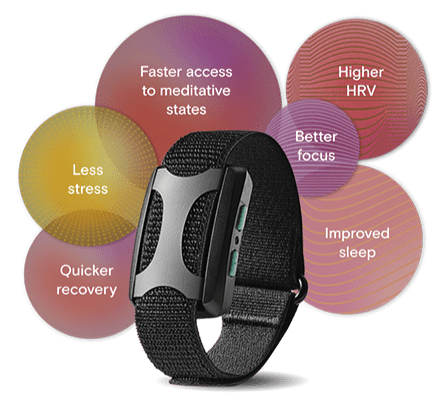 Dr. Weitz: I’ve really been enjoying this discussion, but I just want to take a few minutes to tell you about a product that I’m very excited about. Imagine a device that can help you manage stress, improve your sleep, and boost your focus all without any effort on your part. The Apollo wearable is designed to just to do just that, created by neuroscientists and physicians. This innovative device uses gentle vibrations to activate your parasympathetic nervous system, helping you feel calmer, more focused, and better rested. Among the compelling reasons to use the Apollo wearable are that users experience a 40% reduction in stress and anxiety. Patients feel that they can sleep. Their sleep improves up to additional 30 minutes of sleep per night. It helps you to boost your focus and concentration, and it’s scientifically backed. And the best part is you can get all these benefits with a special $40 discount by using the promo code Weitz, W-E-I-T-Z, my last name at checkout to enjoy these savings. So go to Apollo Neuro and use the promo code Weitz today. And now back to our discussion.
Dr. Weitz: Patients may benefit from having a modest amount of iodine as part of their program, as a supplement in a multi or specialized product that might contain, for example, 150 micrograms of iodine as compared to taking 12 or 25 milligrams, which is 25,000 milligrams as some practitioners like Dr. Brownstein have recommended.
Dr. Schuler: Yeah. That’s that’s certainly a repletion type of dose. A, a good example [00:26:00] is I had a patient, 30-year-old female, and she was trying to conceive. And her partner were using IUIA as was the necessity. And what, and so an expensive process, so you want to get it right.
And they had a couple of different miscarriages and I had come across this like low iodine issue in conception. And so I said, Hey, have you done anything with iodine? She’s like, I can’t touch iodine because of my Hashimoto’s. And I said, yep, I got it. I understand. Fast forward, we said we can’t keep doing the IUI because of expense.
So let’s see how you do on it. She actually started on the 150 microgram dose and felt good on it. And then not on my accord. She went up and she did a 6.25 milligram for like a week. She felt pretty good. Didn’t have any of those thyroid symptoms. She never went to the [00:27:00] 12.5 milligram that you see.
But she stuck at that 6.25 and then she started noticing that she actually had more energy. She’s a nutritionist, so she was very careful and she was diligently monitoring herself. I don’t recommend experimenting all the time on these things, but she was really diligent about it and she ended up taking it for for.
Four months, I believe, and then I, she’s like, I think I’m good. I don’t think we need to talk anymore. Got it. And then I found out six, eight months later that she happened to be pregnant. She was like 20 weeks pregnant. She ended up having a beautiful baby. And so things worked out in her favor on that. And that’s a case of using a slightly higher potency. Yeah. 6.25 milligrams is definitely not 150 micrograms.
Dr. Weitz: Yeah. I have Hashimoto’s and my TSH was going up. I didn’t really have any symptoms and modestly elevated like, TPO maybe a hundred, 150. And I tried the [00:28:00] 12.5 milligrams. My TSH went up to 25, so I decided to go the opposite way. I didn’t really feel any different, but yeah.
Dr. Schuler: Well, you’re a healthy guy, right? I think that the more the healthier you are, the more reserves and the more you can tolerate those sorts of experiments and those sorts of things. So I always say, Hey, assess iodine. It’s super easy. You know, there’s different versions of this.
Dr. Weitz: But do we really know? I mean, just serum iodine I don’t think is particularly accurate, right?
Dr. Schuler: It’s not particularly accurate. But it’s the cheapest. And so we still use it and when it’s on the, in the lower quartile, we say, alright, let’s go ahead and give it a try for repletion and see if we get some changes. And if an individual is already on the. Ill side of things, they will notice positive or negative changes pretty immediately within the first you know, maybe day or two, but also the, within the first 30 days there’s a urinary i, iodine levels can be, [00:29:00]
Dr. Weitz: people use an iodine loading test, but it’s a bit complicated.
Dr. Schuler: And yeah, there’s Iodine loading and there’s not I don’t do it because I want to see what their basal levels are. We excrete a ton of iodine as well as other halides. So that’s one of the things that I think gets a little bit complicated with iodine, is that right?
Dr. Weitz: What Corey is talking about is other minerals that are in the same column in the periodic table of elements called halide. So besides iodine you also have bromide or bromine and we have fluoride or fluorine and chloride or chlorine and consuming these may interfere with the iodine absorption.
Dr. Schuler: Yeah. And vice versa. Putting in a large dose of iodine can cause the. Expulsion of these other halides. So [00:30:00] we pick on bromide and a fluoride for good reason, right? Bromide introduced into the food chain as a preservative and fluoride of course in the water in most places. And that is if those are in the body at higher levels or you can actually replace or cause the detoxification of those hali, which you think is a good thing. But anytime you detoxify anything, sometimes you can have unwanted effects.
Dr. Weitz: Right? And on the other hand, today. We we’ve been supplementing the US population for a long period of time with iodine in the salt, with iodized salt. But it’s become common, especially among people trying to promote better health, not to use iodized salt, and to use sea salt or redmond sea salt or Himalayan salt, pink salt. And those don’t have all that much iodine in it.
Dr. Schuler: Not very much. No. And and you’re [00:31:00] right, if you’re not, if you’re not consuming iodized salt on a regular basis and you’re not consuming a lot of like sea vegetables, you know, kelp, seaweed, those sorts of things and you live where I live in the middle of the, in the middle of a huge continent you’re not necessarily exposed as you would be along the coastal regions where you live and along the east coast, there’s certainly higher levels of iodine intake just because the, hey, the seafood’s way better.
Dr. Weitz: Now on the same topic of thyroid, when we look at the thyroid lab testing are there parts of the lab testing picture, for example, reverse T three that can give us some indications that this may be an energetic problem with dealing with rather than a thyroid gland problem?
Dr. Schuler: Absolutely. So we’ll often see elevated reverse T three when that, when the HPA axis is activated, [00:32:00] when there’s, when’s a stress response issue. Because that T three that active metabolically active thyroid hormone, the thing that’s doing the work inside the cell, there’s a version of it. It’s, I think of it like bizarro T three.
It’s where the iodine’s in the wrong kind of location. And so there’s three iodines on there, but it’s one of them is in the wrong spot. So they call it reverse T three that, zaro T three is not terribly useful. And frankly might not be useful at all to do the machinery at the cellular level that we expect T three to do.
And so if your free T three looks good, but your reverse T three is also elevated, in fact elevated beyond, and the reference ranges are a little bit goofy on this one, but if that ratio is off that can point us to, Hey, this is probably a bioenergetics issue, rather than dumping more T three or even T four.
So [00:33:00] levothyroxine being T four or T three, like Cytomel you might bo bind more of that and you end up with the same ratio that you started with. So you’re not getting where you need to go. You need to take a step back, zoom out, and this is what holistic practitioners like us have been thinking for a long time that maybe we need to look at a slightly different component.
Dr. Weitz: Right. We wanna look at adrenals, we wanna look at thyroid production and conversion and, you know, the nutrients that could be beneficial, like you mentioned, iodine and selenium and vitamin D and even iron.
Dr. Schuler: Yep. Yeah, iron gets a bad wrap probably for a good reason. But the reality is that iron is super important for thyroid metabolism. We tend to look at, you know, iron panels pretty regularly. But sometimes when I get them from other practitioners that’re not running ferritin, they’re just running serum iron. Okay. So what about the storage form? Right. Sometimes we have iron, but there’s a really [00:34:00] high saturation rate and so that’s bound up and not usable. So there’s other ways to be thinking about iron. But a lot of times we either. We avoid it all together or we think it’s great and we use too much of it, but it, there is definitely a nice sweet spot of iron.
Dr. Weitz: So, you just said something there about it being bound up and not usable when there’s a high saturation level. Explain that.
Dr. Schuler: Yeah. So, so ferritin is the storage form correct and correct. It floats around in our blood as serum iron. But there’s also a protein that attaches to iron and probably for good reason because iron is a really strong oxidator. It creates oxidative stress. And so sometimes when we have bumps of iron, like we have a lot, and then we have not a lot, our body will make a saturation pro or a protein that attaches to it. So it is bound on purpose. It’s another protective mechanism. But in [00:35:00] doing so, it causes that iron to not be usable. So if that’s where we talk about consistency of the diet, and we talk about it a lot with like vitamin K on blood thinners, right?
We want a really consistent level of vitamin K. Similarly, we want a consistent level of iron. Luckily iron is stored so that we can we only have to have iron rich foods every other day, every third day instead of eating it all the time. Although eating it all the time in a consistent way is probably a good thing too, especially for those that need it.
Dr. Weitz: So if you have a high saturation level and a high iron serum level, that doesn’t necessarily indicate the iron binding does it.
Dr. Schuler: Not necessarily. Okay. There’s it’s a bit, there’s some more transient inness to that. That’s where and this could be fun. Not that it’s expensive to do this experiment, so I don’t recommend doing it. But if you have that situation of high serum iron and high [00:36:00] saturation if you checked that multiple times, you checked it serially, like let’s call it every other day, you maybe did a blood donation or basically just gave right blood for a lab test, you can see that change pretty dramatically.
Dr. Weitz: And it’s the case that up to 30% of the population has at least one of the now recognized three genes that can lead to excess iron or.
Dr. Schuler: Hemochromatosis is nothing to Snee sneeze at. So that’s the fun name for it, right? A hundred dollars word for it. But hemochromatosis that really they’re genes that say you’re a really great iron absorber.
And I just had a case of this as of a 54-year-old who actually was coming to see me. ’cause he wanted to avoid his cardiologist’s recommendation of statin medication. Different story for a different day. But upon further investigation, we found that his iron was off the [00:37:00] charts high. So, yep. He had lethargy, he didn’t wanna exercise, he knew he had to ’cause of his heart.
What do we do about it? And so we actually did a series of blood donations, three donations over the course of six months, brought his iron levels down. So then I saw him and I was like, I wonder if he’s feeling better? And he popped on and it was a video visit actually. And he popped on and he was like, yeah, feeling a lot better.
Like, I’m feeling better than I have in the last two years. And that iron was just messing me up. And I said, well, you know, thank your parents, thank your grandparents. ’cause it’s genetic for you.
Dr. Weitz: Yeah, absolutely. And I think it’s underappreciated and that’s why I think doing a full iron panel that includes serum iron ferritin iron, saturation level, et cetera, is really important.
Dr. Weitz: And sometimes these patients will have a normal hemoglobin and hematocrit. Oh yeah. And [00:38:00] unfortunately, in the primary care model, what’s done is a CBC. And if that’s normal, nobody’s gonna check the iron.
Dr. Schuler: Yeah. Yeah. I take a look at at MCV and just another thing on the CBC Yeah.
Dr. Weitz: The size of the red blood cells.
Dr. Schuler: Yeah. That can give me a little bit of a clue sometimes it’s not a perfect test. It’s certainly not the direct marker that I’m looking for, but MCV being, and I sort of shoot for this 80 to 90 range, which is a pretty narrow range narrower than the reference range. And if it’s in there, I think okay, we’re probably pretty good. But lower than that, I do think there’s probably an iron issue. If it’s more than 90, I think there’s an iron issue in the too much range. So, that’s how I pay attention to that. But luckily most of the time, if I just want it, I just order it.
Dr. Weitz: So, your energy allocation model makes me think about a couple [00:39:00] other practitioners who talk regularly about there’s Dr. Chris Palmer’s Brain Energy Theory of Mental Illness, and then we have Dr. Dale Bredesen’s concept that Alzheimer’s is a state of synaptic network insufficiency.
Dr. Weitz: Can you comment about that?
Dr. Schuler: Yeah I align with those theories and it makes sense to me that that, that occurs When I was doing my work on this paper we ran into a lot of a lot of evidence on things like bipolar and running thyroid labs in cases of bipolar depression. And it’s the, I’ll say, the evidence is so clear that we should be looking at these markers in mental health. That, and I really appreciate what Chris Palmer has done to bring mental and metabolic health together. But [00:40:00] definitely the evidence is. I wouldn’t say, I wouldn’t say clear, but clear to me. ’cause I’m I’ll work a little bit ahead of the evidence. It’s not so much that it’s at guidelines level, and so that means we need to be advocating for ourselves, for our patients and be talking about, Hey, this is maybe something we can do to see if we can be more stable.
And I’m all for it. So I like that. And of course, Dr. Bison’s a giant when it comes to brain health and I think there’s some really good theory on that. Of course I would, my spin is this, that’s synaptic energy issue, right? That’s mitochondria. The mitochondrial density of those neurons is really high. And so could there be a hormonal thyroid hormone or HP access driven mitochondrial reserve capacity issue in those people that. We’d have to catch, you know, decades earlier, but something we can still do even on the early part of the diagnosis.
Dr. Weitz: Yeah. And we’ve had a number of [00:41:00] discussions recently about a functional psychiatry program. We’ve had Dr. Greenblatt on recently talking about the role of things like thyroid and nutrient levels and all these different metabolic factors that affect mood disorders like depression, anxiety, et cetera.
Dr. Schuler: Doing this work actually stimulated me to enroll in that program. Oh, really? I was like, this is great stuff. I love this stuff. Where can I learn more? And, you know, Dr. Green blot and a few others are certainly experts.
Dr. Weitz: Peter Bongiorno is another good practitioner.
Dr. Weitz: Yeah. So, are there, is there wearable data. Like HRV, sleep you know, or ring things like that can help us get some understanding of this energy allocation picture.
Dr. Schuler: Yeah. A another significant inspiration, right? Or ring has been reporting [00:42:00] resilience as a calculation of a variety of different factors. And I actually don’t even know their algorithm. I should find that out actually, if it, there’s no way they’ll tell me. But that’s something that, that people are aware of and pay attention to.
And, you know, I’m a six year Oura ring person myself and I absolutely can. Can tag, like, alright, I have not felt my best, I have not been my best husband, father, you know, healthcare practitioner. Oh look, my resilience is adequate. And that’s not, you know, it says adequate is bad. Right. I need to be, I need to be solid, strong or exceptional to be the way I wanna be.
And so I do think Oura Ring is probably ahead on that game, but other wearables have some other parameters. I’m just not familiar with all of them. In fact as we were talking a little bit, you’re like, well, hey Corey, the, this theory is kind of neat to think about, but how can you prove it right?
We are actually proposing a [00:43:00] longer term trial on, you know, categorizing people into these phenotypes of whether it’s mobilization dominant, which I talked about. But then the one that’s probably most common and people are most suffering from is this conservation dominant allocation phenotype.
And there’s a, there’s three major phenotypes and if we can categorize them, run the same panel, use the same wearables, treat them as if you would treat them in clinic and track their progress and move from maybe a conservation dominant state into a a mobilization dominant state, which still isn’t quite normal, that’s a step in the right direction. And ultimately we want everybody to be optimally healthy. But seeing those shifts in phenotypes would be really good data to say, yep, this theory holds. Really great water.
Dr. Weitz: Can you briefly explain what those concepts are? The mobilization dominant versus the [00:44:00] conservation dominant patterns?
Dr. Schuler: Yeah. So mobilization dominant is my example of the 38-year-old executive, right? Running on fumes is a really good way of thinking about that. Stressed, not necessarily perceived stress. She doesn’t say I’m stressed, she’s just doing her life. But physiologic stress response is elevated, whereas conservation state would be something like that. That throttle really gets engaged and so the thyroid is like, you know what?
Hormones are not working the way we want to, and that’s a long-term investment. See, there’s that budget and economics type of words. Again, we can reproduce later. We can have libido later, but right now we gotta survive. And so we’re gonna downregulate or throttle down that energy towards those tissues, and we’re gonna move it towards either survival state or simply just [00:45:00] normal living state.
But living in modern society in a down throttled state makes people feel inadequate, like they’re chronic, chronically fatigued. This is when we start seeing the weight gain. This is when we start seeing low motivation and they show up at practices like mine and they’re looking for hormone replacement therapy whether it’s testosterone replacement or estrogen replacement, et cetera. So, those people that feel like they’re getting old are often in that conservation dominant state, but they don’t have to be.
Dr. Weitz: Right. So we used to it’s sometimes described as the, initially you’re in that like high cortisol state and then you’re in that burned out low cortisol state.
Dr. Schuler: Yep. And the only challenge I have with that is that it’s sort of single system oriented, right? It’s like I always, my curiosity just is like, well, what else is going on? You know, the [00:46:00] hypothalamic pituitary adrenal axis doesn’t work in isolation. It works with these other things. And so that’s why I’m like, okay, so that is going on and that it’s light years ahead of just saying, oh, you’re stressed or you’re not stressed that,
Dr. Weitz: right? So, so I pointed out the adrenal part of it, but what you’re saying is we’ve gotta look at the thyroid, we’ve gotta look at the sex hormones, we’ve gotta look at the other components of our system.
Dr. Schuler: Yep. Absolutely.
Dr. Weitz: Okay. And so this plays an important role in in our sex hormones. And it’s common like with thyroid to simply put the person on hormones. And then why is that not necessarily a good thing?
Dr. Schuler: Well, it’s not necessarily a bad thing either. I prescribe thyroid hormones pretty commonly. And so, it’s a matter of is that all we’re doing for somebody? Or what happens if we’re prescribing the thyroid hormone? And this is really [00:47:00] the thank you for asking it because this is really the meat and potatoes here is that if somebody comes in and they’re got, you know, cognitive slowing weight gain, temperature dysregulation and their TSH is elevated, okay, that’s an indicator enough for us to give thyroid hormone. We give them levothyroxine, they’re given levothyroxine, their TSH becomes normal because of that negative feedback loop from the hormones that they’ve been giving, but they feel the same. That’s not successful medicine.
Dr. Schuler: Successful medicine is they’re, we’re not trying to. Treat the labs to treat the labs. We’re trying to treat the labs so the person feels better. And so that’s where I think everybody should start paying attention is, do I have biochemical, euthyroid, the normal labs? But I still feel the same as I did before. And if that’s the case, that’s when we look to those other systems is are the sex hormones needing some support?
Are there benefits [00:48:00] to HPA or stress response? And I like to bottom line this because yeah, we can talk about supplements and we can talk about labs and better assessment. And that’s what I’m really trying to drive at is that we should be looking elsewhere. But the reality is that mitochondrial reserve capacity is very insistent upon getting good recovery.
But that doesn’t mean just rest. It means recovering for, for recovering with purpose. And what I mean by that is that you, if you haven’t done anything to need to recover, the resting doesn’t always help. That’s why, you know, bed rest is sort of like out, out the wagon for most of these chronic conditions.
Good for acute conditions, but not good for chronic conditions. You can’t just recover or rest your way out of things. We need to actually stimulate the response so that there’s a need for recovery and recover. And that benefits us a lot more than we, we might think. So what I’m [00:49:00] saying is we need to exercise, we need to be physically active and we need to get good, proper sleep. So that’s the fundamental basis of maybe not ever getting into my office or never getting this theory applied to you.
Dr. Weitz: Interestingly, in a functional medicine world, one reaction of some practitioners is to say, well, then we need to give T three or then we need to give more T four, even if the TSH is low, and I sometimes will see patients where their TSH is, you know, in the like 0.5 level to where it’s almost hyperthyroid. And some practitioners have decided that they’re gonna just keep jacking up the thyroid till the person says they feel better.
Dr. Schuler: Yeah, there’s some historical negative consequences to that. I mean. I don’t know his medical record, but apparently that’s the anecdote around Muhammad Ali. He felt really great on thyroid hormone [00:50:00] and he kept taking it and took too much of it and had, you know, consequences, negative consequences from that. Of course. But what I I wanna point this out. TSH suppression in thyroid cancer is pretty important. We do it we push the TSH down. But in the absence of thyroid cancer, I think hyper suppression of the signal to a thyroid, or excuse me, any sort of hormonal gland is probably inappropriate.
We see it with testosterone, and when we give too much testosterone, we see a suppression of luteinizing hormone. And when you’re doing that. That’s only done with super physiologic doses. I had a 60-year-old guy come in and his luteinizing hormone was absent, it was gone. And he was on what I would consider a normal-ish dose of testosterone. I backed him off. Is he gonna feel a little bit worse? Yes. Is it better for his long-term support? Yeah. And [00:51:00] same with thyroid. If we’re if we’re giving so much hormone that you’re suppressing the signal to the gland that makes the hormone, then I think we’re probably overmedicating the individual.
Dr. Weitz: Right. Okay. We could continue, but I think we’ve covered this topic pretty good to give practitioners a concept about this. Now some people would. Critique your theory and say, look, this is just a theory. You know, what real proof do you have of this theory?
Dr. Schuler: Yeah. I actually encourage the critiquing because the critique I have of myself and the team that put this together was that, are we pathologizing normal? Are we looking for something that doesn’t exist? Are we making someone sick who’s not sick? And I think that is the most valid critique. And it would be true if we were just treating labs. And so I, you [00:52:00] know, I’m, I’ve often been in the camp of test, don’t guess I wanna know what the answers are. But as I’ve gotten more mature, I’ve really realized that the important part is how the person feels in relation to their labs. And so if somebody is not feeling well, they are not achieving their health goals, then I don’t think we’re pathologizing normal. I think we are just looking deeper and being more curious about their physiology and their responses to the environment.
But the, for the critique that says, oh, this is, there’s no proof of this. They’re, you’re entirely right. We haven’t taken that next step yet. That potential study that we wanna do is yet in the works. And that’s how hypothesis and theory works. You start off with this idea and then you see where the holes are, and you sometimes theory is elegant and beautiful and plausible and wrong, and we will find that out. But I think when people start using this [00:53:00] anecdotally as a framework for themselves and just a vernacular that they can use with themselves and patients they’ll start seeing like, oh yeah, this is stuff I’ve already done. I just haven’t done it together. Right. So, yeah I’m happy to get those critiques.
Dr. Weitz: Yeah. And as you pointed out about sometimes being ahead of the evidence I think. A lot of us are practicing a little bit ahead of the evidence, and that’s partially because the scientific evidence for various strategies that involve diet and lifestyle and nutritional supplement schedules are unlikely to be done because of the cost and the fact that nobody stands to make billions of dollars. And so, you know, the, that is the unfortunate part of how medical scientific research is done, especially now that the NIH has just been completely gutted. So we have [00:54:00] to be, I think, evidence informed. And not always be completely a hundred percent evidence-based. And then just make sure we’re testing and making sure the patients are feeling better and showing good signs, and that can guide our clinical judgment.
Dr. Schuler: Your point is well taken. If we wait for all the evidence, we’re gonna, there’s gonna be people suffering needlessly. Right. So great point on that. And I think that what we will start seeing is more studies like like what Cat Tubes and Dr. Bredesen were involved in these. Let’s treat individuals as cohorts and in let’s categorize them and stratify them as phenotypes. And then we can kind of, well, we have to squint and hallucinate, but we can do that with scientific methods of what is and isn’t working and what can we do to really bring the ball forward. And [00:55:00] so I’m looking forward to that one being formally published. I don’t think it’s out published quite yet, but it’s coming soon. But that’s the kind of research that I think we will type, we will be able to see. But it’s also expensive and needs funding and
Dr. Weitz: And it’s also, it’s gonna be difficult for the mainstream medical, scientific community to fully accept, because the paradigm of what’s considered a valid scientific study is when you change one variable and one variable only. And it, when you’re using a systems-based approach to understanding the body, you have to change more than one thing at a time.
Dr. Schuler: Yeah, absolutely. You’re entirely right.
Dr. Weitz: Great. So how can practitioners and patients contact you find out more about your work? They, of course, they, everybody should go and read the paper, which is in [00:56:00] the international Journal of Molecular Sciences.
Dr. Schuler: Yeah. That’s probably the best place to, to start. And what I tell people is, go ahead and download it and throw it into your favorite AI engine and ask your questions, right? I think it’s one of the benefits of it, of, Hey I don’t wanna read all whatever, 30 pages of this, or all 83 references but I kind of want to get a feel for it.
And yeah, AI can hallucinate and lie to us, but the reality is that if you give it the stuff and you say, Hey, read this for me, and according to this theory, what is, that’s a good way to do it. I can also be reached I’m at Synergy Family Physicians for patients at synergy family physicians.com, and then my work as a medical affairs director@allergyresearchgroup.com are all good ways to find out more about me and what I’m up to.
Dr. Weitz: Are you on social media as well? [00:57:00]
Dr. Schuler: I am. LinkedIn’s probably my favorite, but
Dr. Weitz: LinkedIn. Okay.
Dr. Schuler: I’m a LinkedIn guy. I don’t know why, but I always have been, I guess. So, you find me on LinkedIn. I throw out some ideas and theories there. And then odd enough I’m a, I just started on XI know I’m late to the party, but I’m there as dad bod np if you want to find me on X.
Dr. Weitz: Alright. Great. Thank you so much Cory.
Thank you for making it all the way through this episode of the Rational Wellness Podcast. For those of you who enjoy listening to the Rational Wellness Podcast, I would very much appreciate it if you could go to Apple Podcast or Spotify and give us a five star readings and review. As you may know, I continue to accept a limited number of new patients per month for functional medicine. If you would like help overcoming a gut or other chronic health condition and want to prevent chronic problems and want to promote longevity, please call my Santa Monica Weitz Sports Chiropractic and Nutrition office at 310-395-3111 and we can set you up for a consultation for functional medicine, and I will talk to everybody next week.