Podcast Highlights
The Real Causes of Alzheimer’s Disease with Dr. Craig Tanio: Rational Wellness Podcast 456
Dr. Craig Tanio on Precision Functional Medicine for Cognitive Decline: Infections, Toxins, Biomarkers, and Genetics
Dr. Ben Weitz introduces the Rational Wellness Podcast and interviews Dr. Craig Tanio about a systems-based, precision medicine approach to preventing and treating mild cognitive impairment and early Alzheimer’s, contrasting it with amyloid-only drug strategies. Tanio describes his background and work implementing and studying Dale Bredesen’s network-insufficiency paradigm, including participation in a multi-center randomized clinical trial with clinician judgment, standardized labs, lifestyle essentials, and variable neuromodulatory therapies. They discuss common drivers such as chronic infections (COVID-related immune effects, viral reactivation, tick-borne illness) and toxicants (especially mold/mycotoxins), emphasizing “low and slow” detox and the risk of over-detoxing. Tanio highlights biomarkers (PTau217, NFL, GFAP), EEG/QEEG as a “stethoscope for the brain,” HRV, genomics (BCHE, DIO2, TCN2), hormones, diet flexibility, and supplements including plasmalogens, high-dose thiamine injections, and low-dose lithium affecting tau/amyloid markers.
00:00 Show Intro and Mission
01:02 Guest and Alzheimer’s Paradigm Shift
03:48 Dr Tanio’s Journey to Systems Care
05:51 Why One Change Isn’t Enough
07:34 Randomized Trial Overview
09:39 Precision Approach vs Protocol
13:36 Common Drivers Infections and Toxins
15:17 Chronic Infections and Viral Reactivation
19:41 Biomarkers and Clinical Judgment
22:37 Toxins Mold and Detox Pace
27:26 Low and Slow Detox Strategy
29:55 Measuring Progress EEG and HRV
33:11 Sponsor Apollo Wearable Break
34:44 Expanded Testing Genomics and Genie
36:41 Fatty Acids Omega 9 and Plasmalogens
39:34 Fatty Acid Supplements
40:56 Genetics and Biomarkers
44:53 Hormone Therapy Debate
49:24 Diet Approaches Compared
50:47 Supplements That Move Needle
58:05 Peptides and Protocol Tuning
01:00:55 Alzheimer’s Drugs Reality Check
01:04:31 Registry and Coverage Push
01:09:53 Research Next Steps
01:13:43 Practice Info and Wrap
Dr. Craig Tanio is one of the physicians involved in implementing and studying this systems-based approach and participated in a recent randomized clinical trial evaluating this protocol for patients with mild cognitive impairment and early Alzheimer’s disease. Dr. Tanio is a co-founder of Rezilir Health and the website is rezilirhealth.com.
Dr. Ben Weitz is available for Functional Nutrition consultations specializing in Functional Gastrointestinal Disorders like IBS/SIBO and Reflux and also Cardiometabolic Risk Factors like elevated lipids, high blood sugar, and high blood pressure. Dr. Weitz has also successfully helped many patients with managing their weight and improving their athletic performance, as well as sports chiropractic work by calling his Santa Monica office 310-395-3111.
Dr. Weitz: If you’re looking for clinically useful insights, not wellness hype, then this is the place for you. Welcome to the Rational Wellness Podcast, the podcast for functional and integrated practitioners who want to practice with greater clarity and precision. I’m Dr. Ben Weitz, and each week I sit down with the leading clinicians, researchers, and lab innovators to explore the science lab testing and clinical reasoning behind modern root cause medicine. This is a show focused on practical evidence-informed insights that you can actually use in patient care. Please subscribe to the Rational Wellness Podcast on Apple, Spotify, or YouTube. Please tell your friends and colleagues and if you could give us a ratings and review on Apple or Spotify, we would certainly appreciate it. Finally, to access the show notes and the full transcript, please go to my website, dr Weitz.com.
Hello, Rational Wellness podcasters, today I’m excited to be speaking with Dr. Craig Tanio, a physician who has been working at the forefront of a functional medicine approach for preventing and treating cognitive decline for decades of prevailing view of Alzheimer’s disease has been that it’s a progressive, irreversible neurodegenerative condition, driven primarily by amyloid plaque accumulation in the brain, billions of dollars, and I would should say billions and billions of dollars has been spent trying to develop drugs that target amyloid.
Yet there’s no drug that makes any patient better, only get worse at a slower rate. However, a growing body of research suggests that Alzheimer’s disease may actually be the result of multiple interacting factors. That affects the brain’s metabolic and inflammatory balance factors such as [00:02:00] insulin resistance, chronic inflammation, toxin exposure, sleep disruption, nutrient deficiencies, hormonal changes.
One of the leaders in this new paradigm is neurologist Dr. Dale Bredesen, who has proposed that Alzheimer’s disease is best understood as a network insufficiency, meaning that multiple systems that support brain function become compromised. And he has been publishing studies demonstrating that a systemic approach that addresses many physiological factors that affect brain health can result in Alzheimer’s disease can be prevented and reversed.
Dr. Craig Tanio is one of the physicians involved in implementing and studying this systems-based approach. He participated in a recent randomized clinical trial evaluating this protocol for patients with mild cognitive impairment and early Alzheimer’s disease. Dr. Tanio is [00:03:00] a co-founder of Rezilir Health in Florida and is currently on the faculty at Johns Hopkins School of Medicine and the Institute for Neuro Immune Medicine at Nova Southeastern School of Medicine.
In today’s conversation, we’ll discuss why Alzheimer’s disease may have many root causes, how metabolic health, inflammation and toxins can affect brain health, the role of genetics, including some genes you may not have heard of. The diagnostic workup for patients with cognitive decline and how clinicians can implement a personalized systems-based approach to preventing and treating Alzheimer’s disease. Dr. Tanio, thank you so much for joining us today.
Dr. Tanio: Thanks Ben for having me. Appreciate it.
Dr. Weitz: So what led you to focus on cognitive health and neurodegenerative disease?
Dr. Tanio: Well, I’ve been spending most of my career working on how systems can get complex chronic conditions better, and it’s ranged from, you know, practicing and running a group of community health centers in urban Baltimore. In the nineties, I was a partner at McKinsey and Company, working with international health systems and and payers around how to improve care. I helped to grow a group of Medicare Advantage primary care centers, where the key was getting. Patients out of the hospital and preventing them from coming in the hospital.
But it became clear to me in the teens that there was a better way of helping patients with complex chronic conditions. The researchers were finding that this was all being driven by multiple components, but the health systems were not able to really get at the root causes. And it just seemed that there was a real disconnect between what the molecular biologists were finding in systems biology and the implementation.
So I decided to get back into practice and then go through [00:05:00] functional and integrative training myself. And we founded Reservoir Health. We’ve really focused on brain health almost from the beginning and and training and working with Dale in 2017 because I felt that the key insight was to get the brain better.
You had to get the body better as well. And so you really had to take a whole approach. And, you know, importantly, you needed to get to the tipping point where you could fix one thing, you could fix two things and it wouldn’t change, but you could get to that tipping point if you got there early enough, and that was really going to be a clinical challenge and a research challenge. And so this has been a really gratifying part of my journey to be working with patients who have cognitive impairment as well as chronic fatigue syndrome, where those physiologies are very much overlapping.
Dr. Weitz: I just want to highlight something that you said when you said that you change one thing, nothing. You don’t see significant improvement change. Another thing finally you change a third or fourth thing, and this is a concept that’s foreign to conventional medicine as its practice today. And when we go to study medicine. The paradigm is you just change one variable. One variable only. And that’s one of the challenges of studying this systems-based approach, this functional medicine approach with medicine.
Dr. Tanio: Well, I think what happened is that I think the advent of guidelines you know, in the nineties there was really good intentions, but I think what’s sometimes has happened is in the measurement of quality, it’s gotten a bit distorted and I think in the practice of medicine. We always had first principles of, you know, you needed to just, you know, care for the patient, get the patient better.
And I think with brain conditions especially you know, I think with all chronic conditions it’s multifactorial. But I think with brain conditions, the key insight is you can’t fix one thing and usually [00:07:00] get improvement. You have to fix multiple things better, which sets a whole research challenge. You know, now researchers want to have things clear.
It’s very easy to change one variable and to have the data be clean. But if the biology doesn’t work that way, we have to change the way that we’re doing the studies and we just have to recognize that’s the reality of things. And I think the biggest signal from the randomized clinical trial is that, you know, this approach can work. Period, end of story.
Dr. Weitz: So you just referred to this clinical trial. So Dr. Dale Bredesen has published several studies and this is the first study that’s randomized, that has a control group. And it has now been published in a pre-print, but it’s still awaiting publication in a journal. And this was a study done at your clinic and five other clinics around the [00:08:00] country using this precision medicine, functional medicine approach for patients with cognitive decline, Alzheimer’s disease.
Dr. Tanio: No, that that’s right. And I think that it, it took quite a bit of time to, to set up to get the resources and to get the structure in place. I think we had you know, a couple of things. One was that the prior pilot study had shown a very positive effect. But it hadn’t, there hadn’t been a control group. And so the key objective in the randomized clinical trial was, let’s have a control group and then let’s, and let’s show how this works. There were three sites in the original study that that participated in that study. Two of those sites continued for the randomized clinical trial, and then there were four new centers, and all of the people who were in the study were not.
Formal researchers, we were all clinicians doing this for a [00:09:00] living. And so, you know, we had experience from the real world. And so the first headline I think is in a lot of research, you only get one study that shows it. And and John Ionis from Stanford shows that probably 80% of clinical trials, you don’t get a second a corroborating study.
So now what you have is two studies where you have a control group. You can see that there’s a difference with the control group, and importantly you have four new centers that hadn’t been. Participating in the prior research that gives a little bit more robustness to the fact that this protocol can be implemented in the real world.
And I use the word protocol, but I’m gonna take that back for a second. We got together and we really decided that the right way to, to characterize this is a precision medicine approach. And why do we use approach rather than protocol? It’s because a protocol is just very defined. You know, if you have X, you do [00:10:00] Y.
If you have a, you do B. And part of the life essentials piece, the diet, the movement, the sleep, exercise, brain exercises, stress management, that was very defined in the protocol you know, components that, that there was key objectives of getting people into ketosis, getting people to do a certain exercise regimen.
But then when it comes to the root causes, there’s a lot of heterogeneity on how clinicians approach this, and there’s not a unanimous agreement around how to incorporate any of this. So we agreed that we would do a standard set of labs and then there would be clinician judgment. So that was part two of the set of interventions.
Then there’s a final set of interventions that I like to call, you know, neuromodulatory therapies. It might be photobiomodulation, it might be hyperbarics, it might be neurofeedback. And there was a fair amount of [00:11:00] variability in the centers around who was doing what. And that wa that that heterogeneity was allowed in the study.
And so I think we have when this goes through peer review, we’ll have reached, I think, a milestone in this area of precision medicine. ’cause we will be able to see the impact of these interventions on cognitive decline. And we’ll be able to see both the strength of the outcome and the variability by patients.
Dr. Weitz: Right. So, that’s gonna make it unfortunately, a little more difficult for mainstream medicine to accept the study because of the fact that not only do you have multiple variables, but each patient had multiple variables and depending upon what center they were treated at, there were also different variables. But that, of course, is individualized medicine, which I would argue should be the medicine of the 21st century.
Dr. Tanio: No, with without a doubt. [00:12:00] And I think if you take a step all the way back and you just frame the question, people who have complex chronic conditions and certainly cognitive impairment falls in that category, where do you get the best outcomes? I think, I don’t think that any researchers would push back and say, when. System allows for a key, you know, point of contact who is managing all of the care and can coordinate everything together. And this medicine is complex. And so that can’t be a case manager or a nurse. It has to, I my opinion, be a well-trained clinician who is an expert generalist who knows the whole systems of medicine and can see it from that prism.
And in this case it’s cognitive impairment. It’s how do you get all the parts of the body to work right so that people can get their brain function restored. Now the exciting news is that it can work. We’ve taken, you know, with [00:13:00] da, with Dale Scientific leadership there, you know, there’s really hope for a lot of people where there hasn’t been hope before.
But now I think the task for us as individual clinicians is how do we get this adopted and how do we get this out to patients so that, you know, within the tens and hundreds of millions of people who are at risk, that we can get substantial percentages of them to get the care they need. Right. And that’s gonna take getting coverage for some of this over o over time, because we wanna make it accessible and affordable for patients.
Dr. Weitz: What are some of the most common drivers of cognitive decline that you see clinically?
Dr. Tanio: Yeah. So, so I see clinically I see a lot of patients who come in where they’ve already been trying, and a lot of the protocol, just as an aside in the control group or the standard of care group, I talked with my research coordinator before this and ’cause sometimes she’ll tell me that [00:14:00] I might not be remembering things exactly right.
And I was like, just remind me that you know, when we enrolled people in the study, there wasn’t a single person who hadn’t heard of using lifestyle and root causes approach to improve brain health. And it was a, I think it was a challenge on each of the clinicians to have the, their judgment about, you know, that somebody wasn’t already doing.
Let’s say 80% of the protocol, that wouldn’t have been a good patient to come in. But I think what I see a lot in my practice is that we’ve seen people who have already tried certain aspects of the different interventions and protocols, and they haven’t worked. And, you know, there are common, a couple themes. I think the biggest thing unfortunately is that there’s more chronic infections and toxicant exposures than ever before.
Dr. Tanio: And and so I think people really do struggle with that. And I think there’s I think there are some really important insights we have to collectively have [00:15:00] about how quick you can intervene in some of those areas, because people can certainly take a real big step back, you know? But I think that the chronic infections and toxicant pieces are the most, you know, vexing and frequent challenges that, that we deal with.
Dr. Weitz: What are some of the most common chronic infections that you see?
Dr. Tanio: Well, certainly in the study we saw that probably I would say the if it wasn’t the majority, it was a high 40% or more.
We’re dealing with. COVID or we’re dealing with, you know, COVID vaccine related issues and how that’s affecting the innate immune system. That’s just gonna become a reality unfortunately in our day and age. And then you absolutely deal with viral reactivation, you know, which can be it can be the herpes viruses or varicella.
And then you deal with tickborne where oftentimes you can [00:16:00] see pictures where people have been in Lyme endemic areas, they don’t have clinical Lyme. But suddenly you have a picture where there’s a lot of vascular issues. And then now you see a Bartonella or a Babesia you know, amp antibodies or a fish that comes back and like, well, this, they may just have had low level, you know, Barton Osis, and now how are we going to address that?
And the reason why they’re getting cognitive issues is they’re not getting as much circulation because of the Bartonella, for example.
Right. And you mentioned a viral infection like COVID. And we now know that one of the things that results in long COVID is that the COVID virus Reactivates, other viruses like Epstein-Barr and her b Simplex and cytomegalovirus that are viruses that people got years ago went away, but they still have the virus in their body and it can get reactivated such as by another virus.[00:17:00]
Yes. And I think that we have to recognize a little bit of the limitations of where we are. You know, so some of the outstanding researchers in chronic fatigue would say, you know, what we really need to do is get to looking at the infection in the tissue and not just in the, and not just in the blood.
And what we’re interested if we’re taking care of patients with cognitive issues. You know, what we’re wondering is there a low level infection in the brain somewhere? But we know from autopsy data that it’s there. We can see that in in the autopsy data that patients with neurodegenerative disease have a much higher microbial load.
But we also know that doing an LP doesn’t work. And we also know that serologies don’t always match. So you are doing clinical judgment. What I can see in my clinical experience is when patients come in young and have fewer root causes. Sometimes you know, we’ve had a couple cases where I had a, I had one woman come in who [00:18:00] in her early fifties, she came in for prevention.
Because her mother had significant Alzheimer’s in the, you know, mid eighties and she wanted to be proactive. That’s exactly the message we want people to hear. Right. Unfortunately, we when we, when she did testing her CNS vitals was in the 10th percentile. And and she had been functioning at a high level.
And you know, what I told her is her intelligence was overcoming the fact that her hard drive and her processing unit were not working as well, and. We found a very high level of herpes antibodies and she got Valtrex for six weeks and her scores went back to the 90th percentile.
Dr. Weitz: Wow. That’s amazing.
Dr. Tanio: You know, so we got, you know, we, we identified that at an early stage. You know, when people come in later, you don’t, it’s it gets a little bit more confusing. We were fortunate in the study to be able to use some of the T-cell testing where when it’s positive, that can be a [00:19:00] really I think good biomarker where the T cells can be high when it’s untreated infection and then go down appropriately with treatment infection, where sometimes the antibodies don’t do that nearly as well, you know, and aren’t as good of a biomarker.
So clearly we, I think the science is ahead of our ability to have perfect biomarkers, but that’s really where the research needs to go and the clinicians need to think about. What are the treatments that can be available? You know, one of the beauties of the herbal treatments can be that the risk benefit can be a much favorable balance than using some of the pharmaceuticals, which we wouldn’t wanna use indefinitely.
Right, absolutely. And I want to point out one of the important factors when you talk about viruses being present in the brain is that amyloid, which is present in the brain and can form plaques, which is been studied as one of the main factors resulting in [00:20:00] Alzheimer’s disease. Well, we know that. Amyloid has antimicrobial properties, and there’s a lot of reason to understand that one of the reasons for amyloid being laid down is to protect the brain against these infections. So reducing these chronic viral infections can be very beneficial for the brain, and we can potentially eliminate some of the reasons for the amyloid to be there in the first place.
No with without a doubt is that you know, what we tend to see in a very consistent way is if you can get to the tipping point with patients, you will see most of these new markers, you know, the P 2 2 17, the amyloid 42, 40, the gfap, the NFL, you know, come down in the right direction. It may take time.
Dr. Weitz: Do you run those tests regularly with your patients?
Dr. Tanio: I do. I think that, you know, a lot of the recent,
Dr. Weitz: and you run all four of those?
Dr. Tanio: [00:21:00] Certainly upfront I do, and at this point I think insurance has been pretty good about covering them. I think there’s always a question with testing, you know, if there’s something that’s that, that is better, but is paying outta cash, you know, is that better than doing the, you know, ones that insurance is covered. We make that decision, you know, in conjunction with our patients, so, but I think it’s good to measure.
Dr. Weitz: If they didn’t have insurance coverage, would PTau217 would be that be the one test you would do? Or which one of those tests would you do if you could only do one of ’em?
Dr. Tanio: Well, I think you’d have to look at the clinical sit situation.
Okay. If it was a classic, let’s say, you know, Alzheimer’s is a, is high on the list. You know, if somebody has a oe, you know, four or four, four and and the MRI looks very consistent. If you had to do only one. I would do PT two 17.
Dr. Tanio: now but it’s, you know, in this world now where there’s multiple causes, you know, certainly the neurofilament light has been shown in COVID to be you know, [00:22:00] elevated and so has the GFAP. And so, I think in so many of these brain issues, what you’re doing is trying to triangulate what’s happening and have a little bit of healthy skepticism around each of the biomarkers and put together the picture. But that’s all why we went to you know, you know, a med school and chiropractic school as that we want to use our judgment.
We don’t want to just be replaced by AI. And and cognitive impairment is really a great place to exercise clinical judgment because the markers aren’t perfect, but the opportunity is really high. Right. Talk about toxins. You mentioned chronic infections and toxins. What are some of the most important toxins that you see with patients and what are the best ways of testing for toxins that you have found?
Yeah, so, yeah, so toxicants can again be tricky where I do think we’re in a world where it would be great to have more [00:23:00] industrial strength research to, to get better testing. ‘Cause all of the testing has has some flaws. You know, my favorite testing had been a lab in Germany called IGL, where they were doing t-cell testing of all of the different toxicants, including silicone from breast implants.
And that seemed to correlate very well with, you know, the key issue that we’re having, which is, are toxicants affecting the immune system? Is it affecting the cognition? But. That in, in terms of prevalence what we certainly see in South Florida is is mold and biotoxins and mycotoxins being number one. And I think what we have to really distinguish is you know, so in South Florida. If you’re out near the Everglades, you’re gonna get exposed to mycotoxin, period. And end of story. There’s a big forest fire in the Everglades the last couple weeks. So you’re gonna have a baseline.
Dr. Weitz: We’ve had our share of forest fires in LA as well.
Dr. Tanio: This is true. So you’re gonna get exposed to a [00:24:00] set of toxicants. The real question is that the major issue that’s affecting somebody? And and I do think you have to look at the big picture, which is looking at the innate immune system dysregulation, which is nonspecific. We know infections can do that, and then we can see how much of the toxicants are coming out in the urine, where there are different manufacturers that are doing that. Some people are doing antibodies as well to the, you know, to the mycotoxins. But we just try to get the big picture and I like to look at it in three ways, you know, metals, chemicals and Biotoxins and ’cause the detox method for all of those can be a bit different.
Dr. Tanio: What I’ve found is that if you’re looking at it in cognition, you’re almost always, if somebody has one toxin issue, there’s gonna be others in that category. And I think again, we found it in the study, which is, you know, if somebody took a step back.
What was the instigator of that? And in [00:25:00] many cases it was that between the patient and the clinician, there may have been too fast of a detox protocol and that’s always hard to judge ahead of time. The patients might not have listened to the advice either but the you know, so detox is something where you can really take a step back.
And so we tend to go very low you know, low and slow here. And I think for your audience, you know, sometimes the duration of that is, you know. 12 months, 24, 36 months. Right? It can be a long time to really get this out. So if you’re doing a nine month study, then the question was, well, how fast are you detoxing?
It took us a while to really think through that as a practice. And, you know, we got to the point of view that said, we’re gonna work on getting it out, but we’re certainly not gonna race on trying to get this out over a nine month period. You know, if you will.
And I think this is the reason why a lot of clinicians [00:26:00] don’t use the oral oral agents for detoxing metals and stuff because the oral chelating agents, because they’re so harsh.
Yeah. I think that, you know, we, I think in all these cases there is a hierarchy and a sequence of things. So, you know, we all don’t want to do harm. And in, in most of the time, getting the life essentials down that’s all upside. You know, it’s usually patients are spending significant amount of their personal resources there, so there’s not extra budget that’s needed and you teach them how to do food and sleep and exercise and brain exercise is all in the right way.
That’s gonna make a difference with some of these other root causes. You know, you can definitely take a step back. And so we’ve tried to get to the practice of can we get somebody improving in three to six months? Show them it can be done. [00:27:00] It leads to a lot of confidence at that point and hope and that’s really a key variable.
And then at that point, you can you can build on that. And and that’s the, and that’s a really important lesson because I think the the alternative, if you try to go really fast, let’s say in detox, and somebody takes a step back, you’ve just really lost a big opportunity to, you know, show that it, that improvement can be had.
Dr. Weitz: Give us some clinical insight on some of your strategies for detoxing, metals, mycotoxins, et cetera.
Dr. Tanio: Okay. So, you know, one of the things that we’ve evolved over time is to separate the process of detox. So, okay. I think when we started oftentimes, you know, if you look at somebody’s wellness plan and supplement list, everything that’s supporting toxins is kinda in, in the wellness plan.
And what we’ve said to patients instead is, look let’s say [00:28:00] for the typical patient that might have, let’s say, mold and chemicals and not metals, okay, well let’s do something you know, for example, like sauna. We’ll do that a few times a week. We’ll actually wrap some things that help phase one and phase two detox before the sauna.
And then we’ll do a binder after the sauna, and that will be your detox session. You’ll do, let’s say three sessions a week. You’ll have the weekends to recover. You’ll get minerals on the weekends, especially if you’re chelating with metals. But I think the key thing of pulling that out is you can adjust the duration, the intensity, the amount of detox, and then patients can also pay attention.
And we say, look, when you’re lifting and in the gym, there’s always this saying, no pain, no gain, but with toxins, it’s no pain. No pain. You do not want to feel worse after a detox session. And if you do, you’ve done too much. And so we have to turn that turn [00:29:00] that down. And I haven’t seen you know, especially in sensitive patients, sometimes they’ll be taking, you know, one 16th of the dose of a detox agent.
Then the manufacturer has listed and they’ll wonder, am I detoxing? The short answer is if you do this process and we do it carefully and we measure the detox I mean the toxicants coming out, you will detox. And so, and they have to have a assurance around that. And that’s been a method that’s really helped us avoid mishaps, you know, if you will, because we’ve certainly, you know, learned from, you know, bad outcomes where, you know, the outcome that you don’t wanna have is a patient you know, to leave and say, well, I did the detox on my own and I felt horrible, but I just powered through it. And they took a, you know, a big step back, you know, and that takes a lot of coaching and guidance, but I think low and slow is really important.
Dr. Tanio: Another thing that we’ve developed and that we were using in the [00:30:00] study was to answer the question, is somebody getting better quickly, how can we measure that? ’cause one of the challenges with cognition is, you know, how do you normally measure that? Well, you ask patients their symptoms and you ask and you ask their partner, you know, tell me those. And we had metrics for doing that. And you can do cognitive testing, but sometimes cognitive testing in the real world, there’s can be a lot of test anxiety around that.
Nobody really likes doing it. And so there’s a lot of pressure on the patients to prove that they’re getting better. And what we’ve evolved over time is using the EEG, the QEG as a way of looking at brain activity and saying, is the patient getting better? And that’s been really, I think revolutionary in our practice because it allows us to if it’s needed to see week to week, [00:31:00] that somebody is getting better.
And so the clinical situation would evolve. Now somebody’s taking hyperbaric oxygen and they’re wanting to know, well, you know, I know this is effective in 60 doses, but I’d hate to pay 60 of Hyperbarics and not have it you know, improve. So can you tell me in 10 or 20 doses that I’m making progress?
Right. And with the EEG, you can absolutely see those changes. And so it’s sort of like a stethoscope for the brain. And once you know how to use it, you’d wonder why you you would ever walk away from not using it.
Dr. Weitz: So that’s a great clinical insight. I know you also I saw an article you wrote about HHRV. Can HRV also be an indicator?
Dr. Tanio: Yeah. So, yeah, so HRVI think can absolutely help around looking at the autonomic nervous system, looking at at stress management. I think so much of you know, we’re gonna be in a [00:32:00] situation here where data management becomes the big question, you know, and especially with Aura Rings and others where you get all this data, you know, the challenge with the clinician is how to get it all together and synthesized.
You know, what we did in the study is we had to build some data systems of our own. They were Excel spreadsheets, you know, but I think there was something like. 300 different biomarkers that we were looking at in the study. And so, you can combine it into three or four categories, you know, when you’re talking to a audience that just teach.
But as a clinician, you know, I had to divide it into about 40 different, you know, subcategories that made a difference for treatment. Right. And the beauty of AI now is that about three awakens ago, I just spent a little bit of time on perplexity and computer and vibe coded entirely new dashboard, you [00:33:00] know, without having to go through the technology group.
Because you know, what’s happening now as clinicians is we can get that technology to really work at our fingertips a lot cheaper than we were able to before.
Dr. Weitz: I’ve really been enjoying this discussion, but I just want to take a few minutes to tell you about a product that I’m very excited about.
__________________________________________________________________________
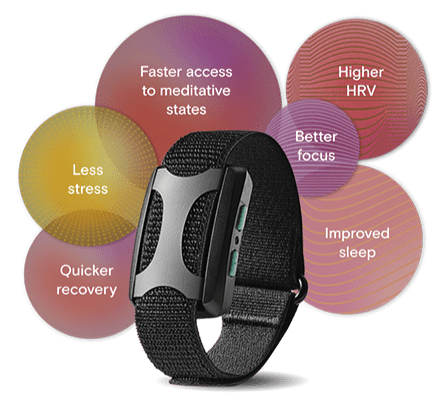
Imagine a device that can help you manage stress, improve your sleep, and boost your focus all without any effort on your part. The Apollo wearable is designed to just to do just that, created by neuroscientists and physicians. This innovative device uses gentle vibrations to activate your parasympathetic nervous system, helping you feel calmer, more focused, and better rested. Among the compelling reasons to use the Apollo wearable are that users experience a [00:34:00] 40% reduction in stress and anxiety. Patients feel that they can sleep. Their sleep improves up to additional 30 minutes of sleep per night. It helps you to boost your focus and concentration and it’s scientifically backed. And the best part is you can get all these benefits with a special $40 discount by using the promo code Weitz, W-E-I-T-Z, my last name at checkout to enjoy these savings. So go to Apollo Neuro and use the promo code Weitz today. And now back to our discussion.
__________________________________________________________________________
When it comes to testing I know that you’ve made some changes to the testing that Dr. Bredeson has proposed. You’ve added some additional markers. Do you want to maybe talk about a few markers you think are important and then now I want to talk [00:35:00] about genomics because you have some really good insights about genetic testing.
Dr. Tanio: Yeah, so, so on the testing side, well, certainly in the study, we all agreed around the same set of metrics to Okay. To start with. And so, that, that was a key part of the, okay. So in this study, may, maybe in your private practice, outside of that, you sometimes add other tests. Yeah, so I think that I’ve certainly found that, that, that doing a genomic testing is good. I think that in, in cases with where mold is a real driver and an open question of how it’s intersecting with in infections there’s a test called the Genie which is done you know, by Richie Shoemakers sort of group, which is looking at gene transcription and looking at Messenger, RNA.
Where that really gives us a good sense of what’s happening with gene expression. And it can pick up a couple of things that can otherwise be [00:36:00] missed. It can sometimes tell us, is there some bacteria in the house, something called Actis that could really be affecting patients? It can tell us when hypercoagulation is a real issue because there’s a very big gene you know, pattern that’s expressed with with hypercoagulation.
It can tell us when the infectious pieces are really revved up. And so, you know, each of the tests is is good for those circumstances. But I would just say for your audience, if you had to add, you know, one, one test to the to the, let’s say the core things that Dale has recommended, I think the EEG has been the, you know, the most clinical value add for me. Something that perked up my interest was in your ebook you mentioned adding Omega nine. Mm-hmm. And I’ve often see omega nine on the omega testing that we do. And can you tell us what the significance of that is?
Yeah, so on the omegas, so I [00:37:00] think that most folks are familiar with Omega-3 as the omega essential fat in fish oil. Yeah. So, with the with all of the omegas, I think we need to kind of look at with the fatty acids on where you know, what we can do for treatment. And so there certainly have been protocols over the year. You know, for example, like Patricia Kane’s protocol, which involves phosphatidylcholine. We all know about omega threes. They’re starting to be now, you know, fatty which is a, which is another option out there. Omega,
Dr. Weitz: you mean the fatty 15?
Dr. Tanio: Yeah, fatty 15, yeah. Yes. Yeah. And then the plasmin. And so I think with all of those, the you know, the challenge has been can we do some of these met measures as as biomarkers to see how treatment is going over time? And we do look at the, we use the Genova Neutro valve often as okay. As a good initial test because [00:38:00] Neutrival is covered by Medicare now and for if you’re in Medicare fee for service.
Dr. Weitz: Unfortunately not if recommended by a chiropractor.
Dr. Tanio: Oh, I didn’t know that. Okay. So, you know, the you know, the Omega the omega nines are often some of these you know, monounsaturated fats that support cell membrane. And you certainly see that in olive oil, avocados, nuts and seeds. But I think that the fatty acids is a critical intervention for PR for practitioners. I’ve been very impressed by what the plasmalogen GLS can do, in particular, when you see white matter issues on the on the NeuroQuant.
Dr. Weitz: Can you explain what plasminogens are?
Dr. Tanio: Yeah, so the plasminogens are a type of fatty acid that is synthesized by the body, so you cannot get it in food. And there was a lot of research done outta Japan that showed that they were they were playing a very important role in both mitochondria [00:39:00] and neurologic activity. And the key the key thing that’s happened in the market in the last five or six years is you used to only be able to get plasma Magen from Malaysia or China, and most of our patients could not tolerate you know, taking those.
And then Dr. Good Now and Prodrome have done some nice innovation in having the plasmin gls, which are for people who have white matter issues and the Plasmin neuro for patients who have more gray matter issues. And and we’ve seen those be a useful part of the armamentarium.
Dr. Weitz: And are these supplements?
Dr. Tanio: These are supplements. Most of the time it’s either in though I have heard some news that he is trying to get the neuro into a pharmaceutical, you know, through the FDA. Okay. But they are supplements at this point. They are in capsules or liquids. Most of the time the capsules are much readily tolerated than the liquids, but. I think most patients will need in addition [00:40:00] to you know, a ketotic diet, you know, some additional fatty acid supplementation, especially if there’s atrophy. If there’s atrophy, we really need to get the hormones right. We need to get the circulation right. We need to have enough fatty acid precursors to really help the brain rebuild itself.
And and so the challenge clinically is, okay, you have omega threes, omega nine, you have PLAs, Magen, what a phosphatidylcholine. And so are you going to be able to have patients take all of this at once? I think what we have done over time is to try to get some of this in like a membrane shake and then to rotate some of the fatty acids. And I think that has worked out worked out well, but it’s, I think, hard to supplement all at once, right? And by giving a shake, you can put the liquid in and get a good dosage and not have to taste it. Yes, that’s right.
Dr. Weitz: When it comes to so we mentioned genetics. Among [00:41:00] some of the genetic markers I saw in your free ebook was the BCHE, which I thought was interesting. Can you talk about that genomic test and the significance of it?
Dr. Tanio: Yeah, so I think with the genomics you know, we work closely with Sharon Hausman Cohen’s company in Telex, DNA, which I think, has done a great job at making genomics available for the functional medicine community. And I think the key piece is not just doing the test, but also having a database available for, patients and for clinicians about how you know, what the research shows. And I think the key concept around the genes, at least the way that I’ve thought it through, is which genes do you need to look at when you don’t have a good biomarker?
You know, so for example, you know, the APOE are important when somebody’s young and and you’re talking about prevention. But if [00:42:00] somebody absolutely already has an elevated P 2 2 17 and they have amyloid on a PET scan, then knowing whether they have, you know, the APOE four gene is gonna be less helpful around immediate treatment.
It still might be helpful a little bit around, around prognosis. But there are a couple of other genes that it’s been hard to actually get biomarker data. So BCHE. I think the real important relevance of that is that if somebody has, you know, let’s say a OE four four, they should, and they have that variant, they should absolutely not be put on drazil.
And if I have somebody who coming in on Aricept, I’m not happy with it anyway. But there’s data outta UCLA showing that if you have that variant pay, it actually accelerates the decline, which is not something that we, you know, want to have done. There are a couple of other variants though. Let’s say something like DIO O2 Dio O2 is looking at the conversion [00:43:00] of T four to T three.
And the important thing clinically is if you are homozygous in those areas, even if the thyroids are rock normal, exactly normal, that you know the no, no symptoms of hypothyroidism, it is worth a trial for cognition to give T three. Because there is some evidence that there’s specific issues in the brain, and I’ve certainly seen that that those, that gene combination lead to improvements because of T three with absolutely normal thyroid. Same thing goes for,
Dr. Weitz: Let me just emphasize to everybody. Yeah. What you’re saying is you can have a patient who has normal blood testing for thyroid, but they may lack thyroid in the brain.
Dr. Tanio: Correct. And they will respond to getting thyroid and that you can see that you have to give it enough time. Same thing with a, [00:44:00] another gene called TCN two. You know, it’s the transporter you know, of B12 into the brain. And there’s been some very interesting research over the last five or six years, a lot in the chronic fatigue world of these rare autoimmune conditions where. Patients had normal B12 and MMAs and they still responded to higher dose B12.
And so I think you know, looking for some of these individual genes can be helpful. The vast majority of the genes though, that you would see in inte X report, you have to look at the network. You know, we are finding, you know, the research out of the genomes is that you can’t look at these things in isolation.
You need to look at them in networks. But I still think that you know, careful review of that will will give you answers on the gene side. That chest serologic testing will not.
Dr. Weitz: You mentioned hormones. How often do you recommend hormone replacement? And I know [00:45:00] Dr. B r e d e s e n has recommended, for example hormone replacement therapy for women even when they’re in their sixties, seventies, eighties for the sake of brain health.
Dr. Tanio: Yeah. So I think this is one of those areas where I think. One of the, one of the challenges I had with functional medicine in the beginning was I was wondering why it wouldn’t get into regular conventional medicine that quickly. You know, you have this research and what’s happening with the adoption and, you know, after, you know, longer than I would like to admit, you know, it it took me a while.
You know, I concluded there were legal, political, social reasons, societal reasons why there are barriers to getting certain insights you know, adopted through through the committees and as such. And so,
Dr. Weitz: fortunately, the tide really seems to be [00:46:00] turning and we have seen the FDA now for the first time, recommend hormone replacement therapy. California has passed a law requiring physicians to treat menopause. Yeah.
Dr. Tanio: And I think the key thing there was the factor that there can be, you know, for better or worse, we’re all human. That means that we all have frailties and and development needs is that none of us are perfect.
And what we could see is that in the HRT world was clear that the that the. The research was not corresponding to the narratives, you know, so the narrative with the Women’s health study came out, the New York Times you know, the next day headline, you know, HRT causes cancer and forget that it wasn’t bioidenticals and it was progestins or what have you.
But when Marty McCarey looked at the data, and he wrote about this in his book you know, medical Blind spots, you know, he called the head of the women’s health study and said, you know, doesn’t look like [00:47:00] there’s an association with cancer. What’s going on? And he got this very long, convoluted a answer.
And I won’t quote it verbatim, but it kind of went like this. Well, you’re technically right. About the data, but we were concerned about the public health implications. If it was there was a relationship, you know, translated, my hypothesis wasn’t supported by the data, so we kind of pushed the narrative anyway.
And I think that, you know, different changes in ideas. Take a long time to get adopted. You know, Einstein said, I don’t change. I, you know, anybody who disagrees with my ideas, they just die out over time. You know? And and we’re kind of facing that here with cognition. You know, we, there’s a lot of momentum that, you know, amyloid is the key issue and, you know, 10 years, but we are making headway.
10 years ago, the Alzheimer’s Society said this was completely not treatable. I think it’s become more conventional wisdom that. Lifestyle is good for prevention, [00:48:00] you know, so there probably should not be a control group where you’re not having some degree of lifestyle changes. But getting back to hormones, you know, I now reassure women that the data is quite different.
And they have heard for a long time from their OBGYNs that there, you know, you should not stay on it. There. The one dropout that we had on our side in the study was a woman who went to her ob, GYN, that she had been friends with for 20, 30 years. And the OB, GYN said, absolutely not. You know, hormones cause breast cancer, period.
No, no nuance, no other things of the data. It’s just that was the mental model. So we have to change these mental models.
And and I think the key thing with hormones is the data says it’s better. In the fifties and sixties in the study we felt comfortable take people all the way to their mid seventies.
I think the older you get the less upside there is, but each case needs to be individualized. Yeah, I think the [00:49:00] important thing is that the benefit of it should be able to be seen within six months and any risks is very minimal within that six month period. So that gives us a clinical insight that we can help to adjust the therapies. But I have seen that BHRT is one of the top tier interventions that will make a difference fairly quickly.
Dr. Weitz: When it comes to diet, Dale tends to recommend a keto flex diet. And I saw where you sometimes like to use a Wahls protocol diet.
Dr. Tanio: Mm-hmm. Well, I think in that ebook we would talk about, you know, certainly we have a lot of autoimmune patients and and the WA protocol has been, you know, there’s been a number of peer reviewed studies showing how it helps auto autoimmune. I think diet is one of those things where the research is hard and the key benefits are in the first few changes that [00:50:00] people make. So, you know, if people say, well, you know, give me a simple guideline around food. I’ll tell them well eat food that doesn’t require a label. That’s you know, that’s a pretty good guideline.
It’s gonna take us away from ultra processed foods. It’s gonna take us to, you know, real food. And you know, I’ve certainly seen people have good benefit who have come to me on a carnivore diet and that they’ve had good results around that. Obviously the flip side and being vegan, you have to address other situations. And so we certainly on the diet side want to understand where people are and how much of the gap can be done with diet. But I tend to be, you know, take multiple approaches with that.
Dr. Weitz: When it comes to nutraceuticals, nutritional supplements, highlight a few that you have found that can be helpful as part of the protocol that you’ve seen move the needle.[00:51:00]
Dr. Tanio: Yeah, so, so I think on moving the needle, let’s let me back up and give a bit of context around moving the needle.
Dr. Tanio: ‘Cause we get a lot of patients who come to us with a let’s say their moca might be 15 or 14, and they’ve been trying the protocol and not, so, so
Dr. Weitz: For those who aren’t familiar, a MOCA score of 30 is perfect, so 14 or 15 is pretty severe.
Dr. Tanio: Exactly. It’s g it’s pretty much getting into early Alzheimer’s. Or they might have, let’s say a moca of 20 or 21 that’s mock cognitive impairment. But you look at the MRI and you see a lot of atrophy. So in those cases, I think it’s really important. To know that time is at a premium.
At that point. If you have somebody who has subjective cognitive impairment, let’s say their moca is 29 or 30, but they still have slight [00:52:00] symptoms, that’s a slow moving train. That train might take, you know, 10, 20 years to get to you know, a true Alzheimer’s. But in those situations where I, what I’d raised, it might just take less a year or less to get to a point where you might have irreversibly lost some brain cells, you know, we can heal.
Injured brain cells, we can’t raise the dead when it comes to brain, those brain cells. So the time is at a premium. And in those cases, we have to really prioritize the interventions. And so sometimes I’ll tell the patients we’ve gotta, you know, get to project status here and there might be. More aggressive interventions that are needed so that we can feel comfortable that you can get neuroplasticity.
And that time is of the essence. You know, and the reason why I say that with the supplementation is that the, you know, [00:53:00] the supplementation can take time. So for example, with the fatty acids, which would really be near the top of my supplements that have, that I think have made a difference to fully, you know, do let’s say an oil change for the brain with the fatty acids that might be a 18 or 24 month period of time.
You know, so you’ve got tho those will take a period a bit of time, you know, for example, you know. Somebody is deficient with B12 and you give them the B12, they need you can see that change in, you know, four or six weeks. Right. So B12 has done dramatic changes in in people who are neurologically deficient. The other thing is, you know, for example, if you have tremors and you have anything that looks like it’s involving the cerebellum or Parkinson’s, high dose thiamine has been really helpful in those situations.
Dr. Weitz: How high a dosage,
Dr. Tanio: I think you would do shots, you know, twice a week of and and that would, and what’s,
Dr. Weitz: what’s the dosage in the shot?
Dr. Tanio: Yeah, [00:54:00] I’d see it’s the I think it’s a hundred milligrams. Let me, lemme double check there. But the key thing with thiamin there is that you, if you just do it orally, it’s gonna go a lot slower. And so Constantine showed that he did some really good research out of out of Italy that showed that that doing these shots would make a huge difference.And the shot of t h i a m i n is a hundred milligrams per ml.
Dr. Weitz: And this is intramuscular?
Dr. Tanio: Yes. Ideally it’s intramuscular. But I, and so when you have those deficiencies I tend to, again, trying to get to the tipping point, let’s try to replete it. Let’s see if there’s a clinical movement, and it’s far better to do that you know, parenterally you know, to see that improvement. And then we can determine, you know, what the right dose is at, you know, after that time.
Dr. Weitz: So that’s what period of time do you tend to see improvements with the thiamine injections?
Dr. Tanio: Usually no no later than six to eight weeks. You know, if you will. Right. But I think both you can just kind of see improvement in in weeks. But those have been, you know, consistently reliable. I think. The, there’s a whole host of other nutrients that when you do a good test like the n nutrival and looking at micronutrients, you can kind of be guided by, you know, what the level of real deficiencies are and and use that to guide your therapies.
I think one of the most interesting nutrients out there that’s I think started to change you know, my practice the last six months or so is lithium. Oh yes, there was that. There was the nature article in Lithium you know, showing that administration of that really was clearing out amyloid. There have been some papers showing, if you looked at CSF fluid, you could see changes [00:56:00] in PTA and amyloid. Obviously we’re not doing that, but I’ve seen clinically now that if you get people on a reasonable replacement of lithium, it has been dropping the PTAS pretty significantly.
Dr. Weitz: Wow, interesting. So I use lithium for anxiety at five to 10 milligrams. What’s the dosage for reducing tau?
Dr. Tanio: I’ve been doing about the same, you know, five or okay, five or five or 10 milligrams at this point, you know, and it reduces amyloid and tau. Wow. That’s great. Yeah. Any other nutrients have been shown to reduce amyloid and tau? Well, I think with the others, you know, that’s the one that I’ve seen the strongest clinical you know, results where the what’s clear, what’s happening is that lithium is is required in the plaque removing mechanisms.
And so it’s not that the patient’s not taking enough lithium, they’ve just used all of their existing stores of lithium and need more. [00:57:00] Just like if you have somebody who has a lot of toxicants and their glutathione is deficient, it’s not ’cause they’re not taking enough glutathione, they’re just using up whatever stores that they need.
And so, so much of the, I think the supplements are, can be, you know, the, it needed to you know, support these mechanisms. And so they, it has to be a bit personalized. So I’ll give you an example. Where I think you know, Terry Wall’s insights have been really good is that not in my patients with cognition, but let’s say chronic fatigue and being very sensitive.
And they might be sensitive to any type of detox, you know, moving on a walls protocol. I’ve never seen people have a bad, sensitive reaction to the, you know, to the walls protocol. You know, and and it does work from a detox perspective, you know, if you will. So, you know, it’s always, you know, food is medicine has to [00:58:00] be the foundation, and then you try to, and then you try to build upon that.
Dr. Weitz: So are there any peptides that you have utilized?
Dr. Tanio: On the peptide side? We’ve certainly seen that, that vasoactive intestinal peptide can be very helpful for patients who have mold and mycotoxin issues. Ox some of the, you know, oxytocin has been shown and in some patients with frontotemporal to be you know, to be of help.
And so that’s been a a pretty important peptide to use. Certainly there are the others, you know, clan Cmax cerebrolysin that have been available to, you know, do a little bit more around the bd NF pathways. That can be helpful. And I think with all of these, the key is, you know, getting to that tipping point.
Figuring out, you know, with the patient that you can achieve success, and then trying to [00:59:00] take that protocol and say, okay, which things can we strip down? Which things can we do more of? And then adjusting it, but you’re adjusting it from a baseline of success. That would really be the key insight, because really what happens over time is, you know, you get to that first insight where patients are, you know, ecstatic that they can make a difference.
Then, you know, you get to a very obvious point of human nature, which is, well, can I get, you know, can I get more and then can I get more for less? You know? And those are very natural questions, you know, that would be exactly what I would be asking if I was in that sit situation. And so I think that’s where the art of this you know, comes into play.
And unfortunately we have less data to, to guide us, but we do have better biomarkers, you know, so that’s where the PTA and the, and all of those blood markers, I think have made it significantly easier to make sure [01:00:00] that you’re still making progress, you know, with patients. You know, I had a great patient who came in he was in New York.
He was a rabbi and he’d been in a huge mold issues, you know, and his p tal 180 1, I think it was six times the normal level. You know, if you will. And then he told me that he ended up going to the hospital a year and a half later and you know, for an unrelated reason. And he said that the medicine team that was rounding on him, they all looked at, you know, wanted to the neurology team wanted to understand what happened.
’cause they hadn’t seen a PTO normalize, you know, without you know, without anti amyloid therapy. He was like, how did you do that? And then he told me, I got outta mold and I got that outta my body. And they were like, oh, we don’t really want to hear about that. You know, so, not surprising.
Dr. Weitz: You have a few more minutes? I know we’re at about the hour more.
Dr. Tanio: No, we can absolutely run later.
Dr. Weitz: Okay. Okay. So, you mentioned that you don’t like your [01:01:00] patients that there seems to be some data that patients who are diagnosed with Alzheimer’s often are prescribed by conventional doctors, Aricept or Nanda. And you mentioned that you have not seen good results with those drugs long term?
Dr. Tanio: Yeah, I mean, I think that there was a good review paper in JAMA just really showing that Aricept did not really improve any type of long-term outcomes. And I think you’ve started to see decreased writing of those as the anti amyloids. You know, medicines have kind of come out. And again, just getting back to our objectives, I think our objectives as individual clinicians, but I think for the health system has to be, look, we should want to see ongoing improvements, so let’s actually hold that as the standard, you know, going forward.
And again, Menendez a little bit different because it does affect glutamate and NMDA. And so in some patients, I’ve, [01:02:00] you know, in some of my chronic fatigue patients with a lot of mold issues that we’ve seen nanda be helpful for a short period of time. So I think it has a different pharma pharmaceutical action.
But I think the, you know, the big issue now, I think that the book might have been written prior to the anti amyloids. You know, the big question is you know, we see so many patients now who are seen by neurology, seen once started on the you know, anti amyloid medicines down here in South Florida, and then they just continue. And most of the time those patients are coming with ongoing decline. But the, you know, the feedback they’re getting is your decline would’ve been worse if you hadn’t been on this medicine.
Dr. Weitz: Right. And those medicines also can have a significant percentage of people who have side effects, including bleeding and inflammation in the brain.
Dr. Tanio: Yeah. Now, yeah, the FDA has black boxed APOE 4:4. That’s saying the side effects are too high, and [01:03:00] yet I’ve seen a number of people who have been put on four with four, four put on put on those medicines. And unfortunately the, you know, the group that probably has the least amount of side effects, which is the APOE three threes also are getting the least amount of benefits, you know, from that.
You know, there may be an intersection where precision medicine and monoclonals would fit in. I haven’t seen the literature around that, but I think if we’re stacking therapies, we have to like, go back to common sense, which is if there’s a set of therapies that are inexpensive, widely available and don’t do the patient any harm. Which is really all of those life essentials. Right? Which is why don’t we, why don’t we, improving your sleep, eating healthy, exercising. Yeah.
And so, you know, obviously if there’s a de norish study that says I’m gonna be low carb, I mean, I’m gonna be not low carb, I’m gonna be, you know, just vegan.
Yeah. Higher carb and vegan, and then there’s a [01:04:00] ketosis study. There’s a dramatic difference on the diet. But I would interpret that as being both of those are better than the standard American diet. Correct. You know, just a period. And and so we need to kind of move past the, you know, the subtle differences and say in the vast majority of population, there’s a huge step forward that could be, you know, going to the type of life essentials we’re promoting.
And that has to be covered in the system as soon as possible, you know, and just regarded as the standard. You know, what’s gonna have to happen with some of these precision medicine approaches is we’re gonna have to have really good research to tangle out the key. You know, of variables that we wanna figure, or even better, that the clinician community that you know that listens to your podcast, can we get together and say, let’s actually do a registry?
Because if you had the registry where we’re getting all of the patients that are [01:05:00] getting these type of interventions, and you ran it for one or two years. And you could show that X percent of people respond. So let’s just, I’ll give you an example. Like in when Kaiser did this for blood pressure, they found that only one outta two patients had their blood pressure treated appropriately.
Those are horrible numbers and they improved it up to 90%. But this is hard medicine. So let’s say out of those, you know, you get 50% respond, you know, because this is in the real world, it’s not always as straightforward, but let’s say out of those 50% who respond, you know, 20% of those are able to plateau and stay at that level on an ongoing basis. If you gave that to a health economist, they would actually likely conclude that’s my back of the envelope on some of these models that this, that these kind of interventions could be cost savings. That we,
Dr. Weitz: We, they could be saving trillions of dollars.
Dr. Tanio: Well, well, here’s [01:06:00] the thing where most of the time we say that, and it’s hard to do in actuality, but this is one of those areas where you could do it. In actuality, people are spending 350,000 on nursing home caregiving at the end of, you know, with with cognitive issues and you front load some of those spending that will make a huge difference. And in terms of quality of life, and so none of what we’re doing costs more than the monoclonal antibodies.
You know, that the average, I think, cost healthcare right now is about $80,000 a year all in, you know, consumer and the healthcare system. And so the issue is not, is this costing enough? It’s, is it covered? And we’ve gotta, we’ve gotta work together to show that you can actually change the prognosis of the disease.
And I think the thing that would accelerate the adoption the most is showing that you could slow progression and, but to slow progression, you really have to kind of have a denominator. You have to [01:07:00] say, Hey, there’s a thousand people who’ve agreed to share their records and now you know, this percentage of people have slowed the, you know, slowed the disease down. So I’m very hopeful that we could start to accomplish that in the next few years.
And theoretically, and I’m talking speculatively without having published studies, but we think what we’re doing in the functional medicine world is we’re removing a lot of the reasons why the body’s laying down the amyloid and the T proteins in the first place.
And so if we can remove the inflammation, the chronic infections, the toxins, the nutrient deficiencies, all these things, we get the brain working better. We remove the reasons why the body would need to lay down the amyloid, and then at that point, we possibly consider using a medication to remove the amyloid W while at the same time, the patient’s following this, these healthy lifestyles you might get a much [01:08:00] better benefit than you would if the patient’s following this unhealthy lifestyle. So has these chronic infections, these toxins is doing all these things that make the body make more and more of the amyloid.
Dr. Weitz: You’re swimming, you know, against the tide trying to get rid of it.
Dr. Tanio: Yeah, no, you’re absolutely right. I mean, if you have an overflowing sink, you have to turn off the faucet, you know, first. And and so there’s no question about that. I mean, the challenge will be you know, what was eyeopening for me is I had a chance to go to the event in St. Augustine with Judy Benjamin’s walk across the country and talk to a number of people who had really been part of Dale’s cohort. And the thing that really struck me is that you had a set of people who were super successful at adopting this, and they had been doing it for almost 10 years. But the common thread was that each of them, there was still a an ongoing battle around the infections and toxicants, because as citizens we don’t have as much direct control.
If somebody chooses to fly [01:09:00] overhead and drop a bunch of pesticides for mosquitoes in South Florida, you can’t you know, do anything about that in the short term. And we continue to get energy from coal and some of these other, and we have all these pollutants in the air, the water, the food, et cetera. Yeah. So you absolutely, you know, need to teach people. Easier techniques to stay, you know, to get toxicants out of that, you know, out of the body. You know, as an example, with chronic infections, we’re not getting rid of COVID anytime soon in terms of you know, the repeat infections and such. And so you need to teach people how to keep their immune system healthy and to make sure that they’re not getting exposed to a lot of you know, chronic infections.
And so, but that’s part of just staying healthy, you know, and doing this right. And so hopefully this doesn’t become an either or, but it’s, let’s do both and let’s do what’s safest and the best medicine for our patients.
Dr. Weitz: What’s the next step for the research? Is there another study being planned?[01:10:00]
Dr. Tanio: So, not nothing that is in far of like, you know, just to be implemented in the next you know, weeks and months. I think we’re all, you know, focused around getting this into you know, the first study through peer review. And then there are likely to be a number of follow-up papers just because the data set is very rich and and then it’ll be, you know.
If you want to get a better randomized trial to kind of identify, you know, some of the key issues that’ll pop up. You know, what I say to people is, you know, you’re gonna have a lot of methodologic critiques, and most of those answers would be, well, that let’s spend 80 million rather than 8 million on the study, and you’ll get some of those answers.
But, you know, the anti-amyloid you know, bill is probably, you know, in, not in the mil, hundreds of millions, but in the, you know, tens of billions that has been spent on that. So, but I do think that the registry idea I’m hopeful that you know, people who are listening to this, we can start to have a [01:11:00] conversation about it.
You know, we have, for example, a registry that we’ve set up with a separate you know, internal research board. So it wouldn’t take actually that much. Extra funding to get that going among a set of people who are committed to sharing data. So I think that’s a real cost effective way of doing that.
And it could answer some other questions about, you know, variability and practices and outcomes. And so I think that’s a good way to get this going. Hopefully there could be other discussions about coverage with insurers, which is I think the, you know, the next piece, I certainly think the evidence is strong enough for coverage, period.
Dr. Weitz: Here you go, Dr. Tanio, here’s $30 for your two hour exam.
Dr. Weitz: it’s another topic for another.
Dr. Tanio: Well, well, let’s just talk about that for a second, Ben. So here’s what I would propose, here’s what I would propose. Here is what I would propose. I would never agree to sign a contract to divide this into piecemeal, but if somebody came to you and said, look, here’s what we think let, we will give you a global fee for the year. You do all of these things. You do everything that you think is necessary and you commit to these outcomes. What kind of conversation is that? It’s a more interesting conversation, right?
Dr. Weitz: Yeah. It doesn’t seem to fit into our model.
Dr. Tanio: Well, it could, you know, half of the patients in Medicare are in Medicare Advantage. And so, you know, there is very common I that’s where I was in before that there are these subcapitation arrangements where you say, I’m gonna pay a global rate. And so, it’s just, the tricky thing around that is, is that, you know, you can have higher cost patients, lower cost patients, and that there can be a different type of risk.
But I think that we’ve gotta think about ways in which we can preserve our [01:13:00] independence because what, again, what we find is in this care. So much of the value is between the visit and the preparation for the visit and the coaching that happens and all of that. You can’t divide it into a dollar per visit that just does not work with chronic conditions across the board.
It doesn’t work well for diabetes, it doesn’t work well for heart disease. And so, you know, we’ve have to figure that out in the meantime, you know, with a lot of us having cash-based practices, you know, the question can be how do we just share some of this data so we can make it more compelling so that patients will you know, walk with their feet.
Dr. Weitz: So that’s great. Let me know if there’s anything I can do with helping with the database and how can patients find out more about you, contact you, and do you have any programs for training practitioners?
Dr. Tanio: Yeah. So, so where people can find us is we’re on the web at [01:14:00] reela health.com. The and eight six six reela is our phone number.
And you know, we have we have handles on on Twitter and all of the social media stuff. I think that on training programs we’ve not had that at this point. You know, I’m on faculty at Nova, so we do have some med students that have rotated through our practice and do teach some of the residents at Hopkins about these type of principles.
I’ve been doing a you know, a seminar with them about that. And you know, but we are, you know, I believe that in this world of what we’re doing, there should be nothing that’s proprietary. We should all just be working together around just trying to get you know, good practice in as many as in many individuals as possible.
Dr. Weitz: That’s great. Thank you so much, Dr. Tanio.
Thank you for making it all the way through this episode of the Rational Wellness Podcast. For those of you who enjoy listening to the Rational Wellness Podcast, I would very much appreciate it if you could go to Apple Podcast or Spotify and give us a five star ratings and review. As you may know, I continue to accept a limited number of new patients per month for functional medicine. If you would like help overcoming a gut or other chronic health condition and want to prevent chronic problems and want to promote longevity. Please call my Santa Monica Weitz Sports Chiropractic and Nutrition office at 310-395-3111 and we can set you up for a consultation for functional medicine and I will talk to everybody next week.