To cheese, or not to cheese, that is the question:
Whether ’tis Nobler in the mind to suffer
The Slings and Arrows of saturated fats,
Or to take Arms against a Sea of carbohydrate troubles,

There has been a recent trend in the nutrition world towards recommending eating cheese as part of a healthy diet. Take the currently popular Wheat Belly book in which Dr. William Davis says, “Enjoy cheese, another wonderfully diverse food. Recall that fat is not the issue, so enjoy familiar full fat cheeses…” (p.209, Wheat Belly. 2011; Rodale).  Dr. Davis is arguing that the biggest threat to our health is eating high glycemic carbohydrates like wheat and other processed grain products.  Dr. Davis also recommends against eating any grains, rice, potatoes, legumes, and even recommends against eating more than 2 strawberries or a few wedges of apple at one sitting, as these can spike your blood sugar.  When you go this far in restricting carbohydrate intake, you are left with proteins and fats to fill out the calorie needs, so it becomes difficult to avoid recommending high fat foods like cheese.  This is especially the case when dealing with athletic men, who might need 3000 calories/day or more just to maintain their weight.

Granted, cheese is a food that can add taste to many dishes, especially in small quantities.  But I would argue that cheese contains primarily saturated fat and saturated fat is associated with a number of potential health problems, including poor heart and brain health.  Consider a recent study in the Annals of Neurology that showed that women that ate the most saturated fats had the most decline in their memory and brain function over a four year period. (Okere OI, Rosner BA, Kim DH, et al. Dietary fat types and 4-year cognitive change in community-dwelling older women. Annals of Neurology. 2012;72;124-134.) There is lots of research linking saturated fat intake with increased risk of heart disease and other chronic diseases, including various forms of cancer.

In contrast, I think it makes more sense to recommend eating modest quantities of low glycemic carbs, including legumes, some whole grains, like quinoa, and whole fruits, which are rich in phytonutrients, in modest, though not tiny quantities.  A modest serving of fruit is about 100 calories worth, such as a medium apple or a cup of strawberries.  In addition, these carbs should be eaten with proteins and healthy fats to further reduce their glycemic load.

On the other hand, adding a little low fat cheese can make a vegetable or other dish much more palatable, so I think a little cheese is o.k..  But just because cheese won’t spike your blood sugar, doesn’t mean that it is good for you.  Maintaining a consistently lower blood sugar is important, but it is not all there is to good health.  And the saturated fat content and the high calories make cheese not the healthiest of foods.

Brown fat is fat that is metabolically active and helps your body burn more calories.  It is typically found along the neck and upper back region.  We used to think that it only existed in infants, but we have learned recently that it is also found in adults.  This is in contrast to the typical white fat that is not metabolically active and is found everywhere else.  Brown fat levels typically decline with age.  Research indicates that having more brown fat will boost calorie burning and will make it easier to keep your weight down.

The body uses brown fat to raise the body temperature when it is cold.  In fact, exposure to cold temperature seems to increase brown fat activity.  Some researchers in the health and nutrition field claim that exposure to cold stimulates brown fat production.  Another reason to think twice before turning your central heat on, besides the heating bill.  Other research indicates that exercise can cause white (regular) fat to be converted into brown fat.  Regular, vigorous exercise at least 3-4 times per week is your best best to boost your brown fat, along with all the other benefits of exercise.  And, if you feel up to it, take a cold shower afterwards.

But if cold weather makes more brown fat that helps you lose weight, what about all those overweight folks in the midwest?

How to Avoid Gaining Weight Over the Thanksgiving Holiday

by Dr. Roseanne Dembeck and Dr. Ben Weitz


  Thanksgiving dinner wasn’t always so indulgent or calorie filled.  It was all eaten over a three day celebration.  It wasn’t until the mid-late 1800s that the meal became a national past time, when it was declared a national holiday by Abraham Lincoln.  Did you know that the traditional Thanksgiving meal can be full of nearly 5,000 calories or more?  Yikes!!  That’s double what most of us should eat on a daily basis, let alone at one meal.

Thanksgiving weight gain isn’t inevitable.  With a few simple changes you can enjoy the feast without wrapping yourself in those extra pounds.  Consider these ways to help maintain your weight while still enjoying the good cheer and delicious food on Thanksgiving Day.

  1. LIMIT YOURSELF TO ONLY ONE PLATE OF FOOD.  Fill 1/3 of your plate with turkey and other meats, though avoid the skin of the turkey and go easy on the gravy.  Fill 1/3 of your plate with various color vegetables—greens, green beans, peppers, carrots, beets, etc..  Fill the remaining 1/3 of your plate with whatever you want.   Let yourself have one small slice of pie for dessert. 
  2. DON’T SAVE UP.  Don’t avoid eating earlier in the day and save calories from earlier meals for “the big one.”  You will inevitably get too hungry and overeat to compensate for missing those meals.  Thanksgiving Day should include small healthful meals before dinner.  Then, you won’t be too famished to practice portion control when dinnertime comes.
  3. AVOID HIGH CALORIE D’OUVRES AND APPETIZERS.  Munch on fresh veggies and fruit instead of high fat appetizers.  Have a large serving of salad if it’s available.  Don’t eat food just because it’s there.  
  4. AVOID THE SUPER HIGH CALORIE FOODS.  Avoid the mac n cheese, mashed potatoes, and the cheese filled casseroles.  Eat only a small portion of cranberry sauce, as it is loaded with sugar.
  5. PACE YOURSELF AND EAT MINDFULLY. Eat slowly and savor every bite. Put your fork down between bites and take the time to talk to family and friends and enjoy the sense of community.  Give the food a chance to let you feel the satisfying feeling of fullness.
  6. FILL UP ON WATER.  Water has zero calories and is a great way to make yourself overcome the sense of hunger and feel full.  Don’t like plain water?  Add a slice of lemon or cucumber to give it a bit of taste.  Avoid high calorie drinks like egg nog.
  7. CHEERS.  If you drink alcohol, limit yourself to one glass of wine.  This will limit your calories and you’ll get some health promoting polyphenols like reservatrol as well.
  8. DESSERTS.  Enjoy a small serving of dessert.  Choose pumpkin over pecan pie and save a few hundred calories.  Eat just the filling to take in fewer additional calories and trans fats.
  9. DON’T SLEEP IT OFF.  At the end of the meal, drink a glass of water and push away from the table to help you realize that you are full.  Get up and move around after dinner.  Help clean up the plates and load the dishwasher.  Take a leisurely walk or play a game that gets you up and moving.  Several hours after the large meal you can engage in some more rigorous activities, like basketball, flag football, or anything else you enjoy.


As you give thanks on this day, take the time to express gratitude to your body for all it does.  You can honor that gratitude by making decisions that honor your body – like going to the gym or exercising. Perhaps Thanksgiving can mark a new (or renewed) commitment to your body’s health.

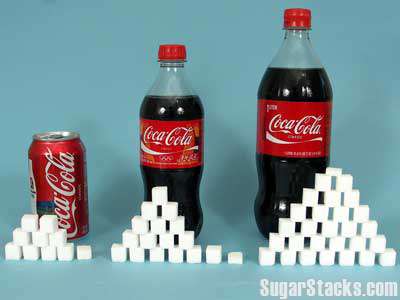
The average can of soda contains 10 teaspoons of sugar (one teaspoon = one packet = one sugar cube).

Drinking soda and juice are probably not your best health options for a number of reasons.  While soda is clearly the least healthy beverage due to sugar or artificial sweetener content, as well as the preservatives and other chemicals and the acidity,  juice is also very high in sugar, both natural and added.  Both soda and juice can eventually contribute to obesity, diabetes, tooth decay, fatty liver, heart disease, and even cancer.  The  best beverage to drink is water, by far.  Add some lemon juice or some chlorophyl or some mint to give it some flavor without sugar.   Plain green iced tea is also a good alternative.

Several recent studies highlight some of the negative effects of juice and soda.  One recent study, “Orange juice limits postprandial fat oxidation after breakfast in normal-weight adolexcents and adults”, published in Advances in Nutrition, found that drinking a glass of orange juice with breakfast reduces the amount of fat burned.  Not only does the orange juice contribute an extra 200 calories or so, but it reduced fat oxidation (fat burning) and other studies have shown that fat oxidation rates predict weight gain.  This may be due to elevated insulin levels after drinking the juice.  Insulin is a hormone secreted by the pancreas when the blood sugar  is high.  Insulin tends to make your body store fat.  Managing your blood sugar  and maintaining insulin sensitivity in the cells keeps insulin levels low.  This is why I advocate eating small, frequent meals and a low glycemic meal plan that doesn’t cause spikes in the blood sugar.

Before you reach for that testosterone gel because your libido is reduced and/or you have been diagnosed with low “T”, think about a few things.  The first thing to consider is that most cases of ED, ie., erectile dysfunction, have more to do with inflammed, clogged arteries than they have with testosterone levels.  Inflammation on the insides of arteries, the reduced ability of these arteries to dilate due to hardening of the arteries, and the increased likelihood that cholesterol will build up inside these arteries, that results in decreased blood flow to the brain, the organs, and the penis.  Addressing the inflammation and other aspects of endothelial dysfunction by eating a healthier diet, losing weight, consuming fewer trans fats, more omega 3 fats, fewer high glycemic carbs, more antioxidants, and getting more exercise will do more to help you than taking testosterone gel.

Second, consider that pharmaceutical companies have made “low T” a medical diagnosis that needs to be treated with a prescription of testosterone gel or injection.  Their goal is not our health but selling us more prescription medications like Andro gel.  So think twice before you simply reach for the testosterone.

Thirdly, consider that taking testosterone has a number of potential side effects, including an increased risk of prostate cancer, heart disease, kidney and liver damage.  More minor side effects include acne,  hair loss, breast tenderness, gynecomastia (growth of female type breast tissue in men), aggressive behavior, mood changes, and shrinkage of the testicles.

Fourth, also consider that most of us have been exposed to 100s of toxic estrogens (xenoestrogens) such as pesticides, food preservatives like BHA, and bisphenol A, that inhibit testosterone  levels.  Did you know that virtually all cans are lined with BPA, as are most shiny cash register and credit card receipts?  Long term exposure to these estrogenic toxins can reduce our testosterone levels.  Wouldn’t it make more sense to rid our bodies of some of these estrogenic substances to allow our natural testosterone levels to return rather than masking the problem with testosterone gel?

Before taking testosterone, you should consider doing the following things:

1. Lose weight, since excess body fat will be converted into estrogen.

2. Do an estrogen detox cleanse to reduce your body burden of toxic estrogens.

3. Take supplements that promote estrogen clearance, such as indole 3 carbonol or DIM.

How do you do an estrogen detox?  You need to do a modified cleanse by eating mostly vegetables and fruit for a week, 10 days, or a month.  You need to avoid or at least limit alcohol, coffee, and anything that places any stress on your liver.  You need to drink plenty of water and make sure that you are having a bowel movement every day, so that the toxins leave your body.   You need to take nutritional supplements that support both phase I and phase II of liver detoxification as well as support the clearance of estrogen.  There are medical foods that easily support both of these functions that can be made into convenient shakes.

Only after detoxing, improving estrogen clearance, losing weight, dealing with stress levels, making sure that your digestive system is functioning properly, eliminating any heavy metals you may have been exposed to, and correcting any nutritional deficiencies, should you consider taking testosterone.  We should always get to the cause of the issue rather than just masking the symptoms with drugs.


You relax on your sofa after dinner and watch a movie.  Then you start tasting acid in your throat and you feel like your food is coming back up on you.  This is often referred to as Heartburn and it is often diagnosed as Gastroesophageal Reflux Disease (GERD).  More than 50 million Americans experience  this condition frequently.  But why does it happen?Conventional medicine thinks that the problem is caused by too much hydrochloric acid secretion and it is typically treated with drugs that block stomach acid.  Is this correct and what are the effects of these drugs?

The fact is that esophageal reflux is likely caused by too little rather than too much stomach acid, which then results in insufficiently digested food being pushed back up through the esophageal sphinctor towards the throat.  This bolus of undigested food carries the limited amount of acid from the stomach back up into the esophagus, thus irritating the lining of the throat.  We know that it takes a tremendous amount of the body’s energy to produce hydrochloric acid and that is why many of us are producing too little hydrochloric acid.  This is especially the case as we get older.  See the following graph from the book, Why Stomach Acid is Good For You, by Jonathan Wright:


Reflux (GERD) is typically treated with drugs that block acid production, including proton pump inhibitors like omeprazole (Prilosec), lansoprazole (Prevacid), esomeprazole (Nexium), and pantoprazole (Protonix).  In fact, such proton pump inhibitor drugs are among the most prescribed drugs and last year over 147 million prescriptions were filled for such drugs.  But these drugs have lots of side effects and they don’t get to the cause of the problem.

One reason these proton pump inhibitor drugs have such serious long term negative effects is that they block your ability to properly break down and digest your food.  This prevents you from absorbing many of the nutrients in the food.  Along with pancreatic enzymes, hydrochloric acid secreted in the stomach is part of the chemical process in our digestive tract that breaks down our food.  This can lead to deficiency of calcium, magnesium, zinc, iron, sodium, beta-carotene, folic acid, vitamin B1, and vitamin B12.  This, in turn, can lead to increased risk of osteoporosis, hip fracture, and anemia.

Another reason for problems with PPIs is that stomach acid helps control the growth of certain kinds of bacteria.  Therefore taking these drugs can result in bacterial overgrowth of the stomach and small intestine, increased risk of Costridium difficile infections, and of bacterial infections such as pneumonia, Cympylobacter, and Salmonella.

In addition, PPIs increase the risk of kidney and heart problems.  And while it is known that GERD increases the risk of Barrett’s esophagus and of esophageal cancer, despite widespread usage of PPIs in the United States, there has been an increase of these conditions.  Therefore these acid blocking drugs are not reducing the incidence of esophageal cancer.

 So if these acid blocking drugs are not the answer, what should we do?  For many of us the answer may be to take supplements of betaine hydrochloric acid to enhance the digestion and breakdown of our food.  Digestive enzymes may be needed as well. This strategy should be coupled with some dietary changes and nutrients that will help to rebuild the damaged lining of the digestive tract.  But don’t just stop taking your acid blocking medication without speaking to your doctor and slowly reducing the dosage and weaning yourself off.  Schedule a nutrition consultation and Dr. Weitz can guide you through a nutrition program to help your body to heal and overcome this reflux condition.


Part of this blog has been based on a chapter on Over-the-Counter Remedies for Digestive Health: Potion or Poison? by Jerry Hickey and Gerard Mullin in the book Comparative Gastroenterology, edited by Gerard Mullin and published in 2011 by Oxford University Press.

 
A recent meta-analysis of studies on magnesium reveals that  the increased intake of magnesium is associated with decreased risk of stroke.  (Larsson SC, Orsini N, Wolk A. Dietary magnesium intake and risk of stroke: a meta-analysis of prospective studies. Am J Clin Nutr 2012;95:362-6.)
 
Magnesium supplementation has been shown in other research to reduce blood pressure, fasting insulin levels, have favorable effects on blood sugar and blood lipid concentrations and reduce the susceptibility of lipoproteins to peroxidation.  This current study found that an increased intake of 100 mg of magnesium is associated with an 8% decreased risk of stroke.  Rich food sources of magnesium include green leafy vegetables, beans and whole grains.  I recommend taking at least 200 mg of magnesium per day through either your multivitamin or by adding magnesium glycinate or citrate, in addition to eating a healthy diet.  Take 400-600 mg divided into 200 or 300 mg taken several times per day if you are dealing with high blood pressure or muscle spasms.
 

You’ve probably been told that over the counter pain killers, esp. NSAIDS, like ibuprofen, and Tylenol, are extremely safe.  Well, not exactly.  More and more evidence has been accumulating over the last few years about how dangerous these drugs are.  NSAIDs (non-steirodal anti-inflammatory drugs) increase the risk of high blood pressure and chronic heart failure, irritation and ulceration of the stomach, and can cause liver and kidney problems.   We’ve also known that aceteminophen (Tylenol) can put the liver under stress.  Now we are learning that aceteminophen can also lead to kidney problems.  

A form of kidney disease known as analgesic nephropathy results from the regular use of acetaminophen (Tylenol) and ibuprofen (Advil, Motrin) and other anti-inflammatory medications, according to the  National Institute of Diabetes and Digestive and Kidney Diseases .   Analgesic nephropathy is a chronic disease that results from taking pain relievers over long periods of time and results in gradual damage to the kidneys that eventually leads to kidney failure and the need for dialysis or kidney transplant.   It is estimated that 4 out of every 100,000 people in the US will develop analgesic nephropathy.  Acetaminophen is also a leading cause of liver failure in the US.

I understand that there are times when NSAIDs and pain killers are necessary, but you should try alternatives whenever possible, including chiropractic care, ice, electrical muscle stimulation, cold laser, natural anti-inflammatory supplements  (such as turmeric, ginger, Bosellia serrata, capsicum from hot peppers, proteolytic enzymes, vitamin D, fish oil, and anti-inflammatory medical food), and Glucosamine sulfate (with or without chondroitin sulfate and/or MSM)for joint, ligament, and tendon healing.   Speak to Dr. Weitz or Amber about additional information on these supplements.


A new study documents the beneficial effects of fish oil supplements for elderly (average age 64) women who are also engaged in a strength training program.  This adds to the growing list of impressive benefits of fish oil supplements. (Rodachi C, et al. Fish-oil supplementation enhances the effects of strength training in elderly women. Am J Clin Nutr 2012;95:428-36.)

The nervous system is composed primarily of fats and fish oil supplements, which contain omega 3 fats, have been shown to improve nerve transmissions (improved nerve conduction velocity).  Fish oils (containing EPA and DHA) have also been shown to improve heart muscle contactility.  Therefore, it is reasonable to suspect that if fish oils become incorporated in the nervous system and the muscles that the muscle might be able to contract better or more forcefully. 

This study demonstrates that when older women engaged in a weight training program and also took 2 grams per day of fish oil supplements for 90 days, they had greater increases both in strength and in functional capacity (ability to stand up from a chair).  There was a significant increase in the strength of various muscles as measured by their peak torque output in those who both engage in weight training and took the fish oil over those who just did the weight training.  Likewise these muscles also contracted more quickly and these women had more functional strength as demonstrated by the ability to rise from a chair using their leg muscles.

Based on this and many other studies, I highly recommend that you not only eat fatty fish such as wild salmon twice per week, but that you also supplement with a high quality fish oil supplement on a daily basis.

I advocate eating a small meal or snack every 3 hours or so throughout the day. This allows blood sugar levels (and insulin levels) to stay more consistent through the day and reduces the carbohydrate cravings that result from big dips in blood glucose.  This facilitates the process of achieving and maintaining optimal bodyfat levels.

A recent study published in the February 2012 issue of the American Journal of Clinical Nutrition, Less frequent eating predicts greater BMI and waist circumference in female adolescents, backs this view that eating small meals or snacks facilitates leanness.  This study examined the habits of female teenagers and discovered that those who ate less frequently had a higher body mass index (BMI) and a larger waist circumference.  This contrasts with other articles that have attributed frequent snacking as a risk factor for weight gain.