By following the proper lifestyle, type II diabetes (95% of cases of diabetes today in the US are type II, which is caused mainly by diet and lifestyle) can be managed and in some cases, it can be reversed. Especially if you are not yet taking insulin. And we can prevent your pre-diabetes from becoming full blown diabetes virtually every time if you comply with our lifestyle recommendations.
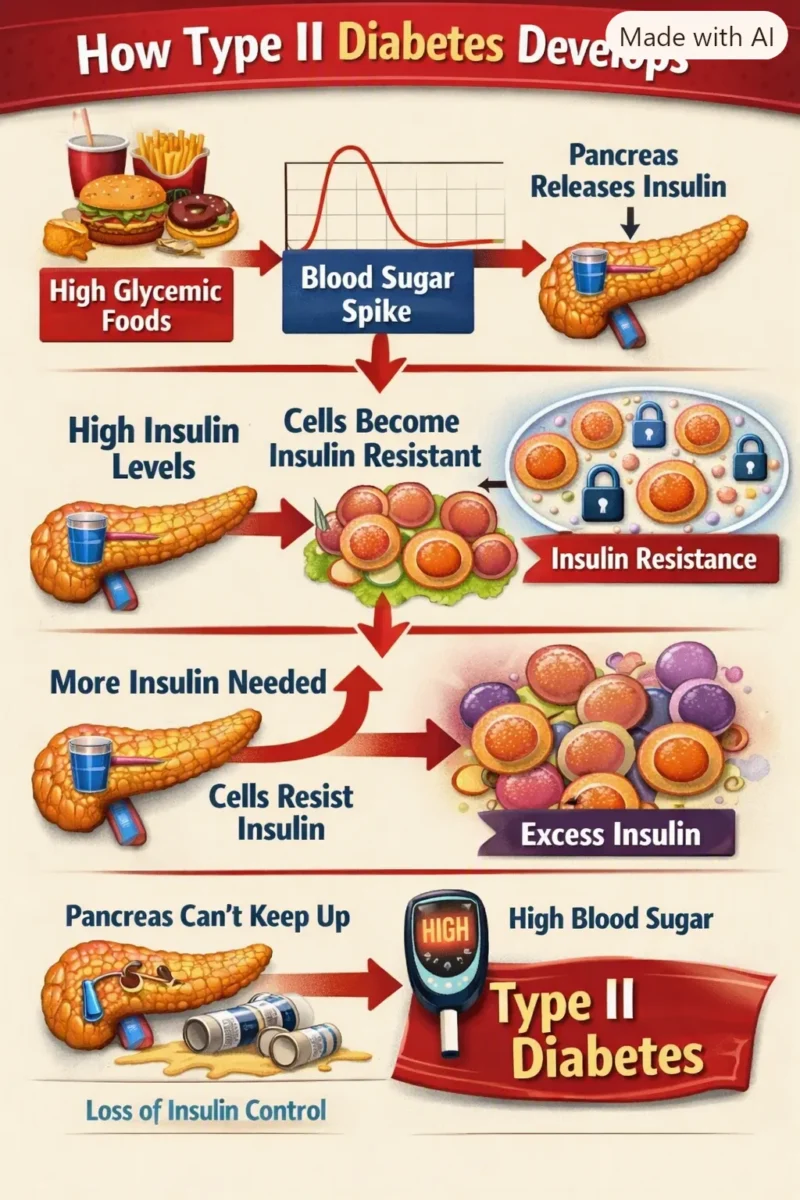
Let’s try to understand how type II diabetes develops. Each time you eat a carbohydrate that causes your blood sugar to spike–high glycemic carbohydrates–your pancreas secretes insulin to lower the blood sugar. A steep spike in glucose results in a large secretion of insulin. But insulin is very inflammatory and the cells do not like being exposed to a lot of insulin. When this process is repeated over and over from eating high glycemic carbohydrates, eventually, the cells start walling themselves off from insulin and insulin resistance develops. The next time your blood sugar spikes from high glycemic carbohydrate ingestion, your pancreas will have to secrete more insulin to lower your sugar since the cells are now resistant to insulin (insulin resistance). Eventually over time, the pancreas is no longer able to keep up with the demand. This is the process that results in type II diabetes.
In the initial stages of diabetes, the pancreas is still secreting insulin, though not enough to do the job with the level of insulin resistance that exists in your body. The goals here is to make your cells more sensitive to insulin and to regulate your blood sugar with diet, exercise, and supplements. Intervening at this stage, gives us the best chance of getting your diabetes reversed and getting you off medication. Once you are on insulin injections, reversing diabetes is quite a bit more difficult. That’s not to say that you cannot manage insulin dependent diabetes more efficiently and decrease your need for insulin. The less insulin you need the healthier for you.
How do you know if you have diabetes? It is defined as having a fasting blood sugar of 126 or above or a Hemoglobin A1C (glycated hemoglobin) of 6.5 or above. The most common symptoms are increased thirst, increased urination, increased hunger, and big dips in blood sugar that lead to lightheadedness, fatigue and irritability, etc. Unfortunately, many clients with type II diabetes have no obvious symptoms. And if untreated for years, progressive damage to pancreas function can occur and then damage to various organs as sugar residues start building up. Like with many conditions, the earlier you can start treating diabetes with diet and lifestyle changes, the better. Make an appointment and let me help you get your sugar levels under control and reduce/eliminate/or prevent your need for medication. Diabetes and Pre-diabetes